A bin cleaning machine helps sanitation teams clean waste containers where the mess is created: inside the bin, around the lid, and at the base where residue collects. For wheelie bin service routes, the right equipment reduces manual washing, controls wastewater, and keeps the cleaning process contained. barridora Haide supports this need with mobile and truck-mounted bin washing equipment designed for 120L, 240L, 660L, and 1100L containers, depending on the model and work setting.
The practical value is not only cleaner plastic. A well-planned route can move from one collection point to the next with less water splash, fewer open-drain problems, and a more consistent cleaning result for residential communities, commercial properties, food service zones, and public sanitation teams.
Why Wheelie Bin Routes Need Controlled Washing
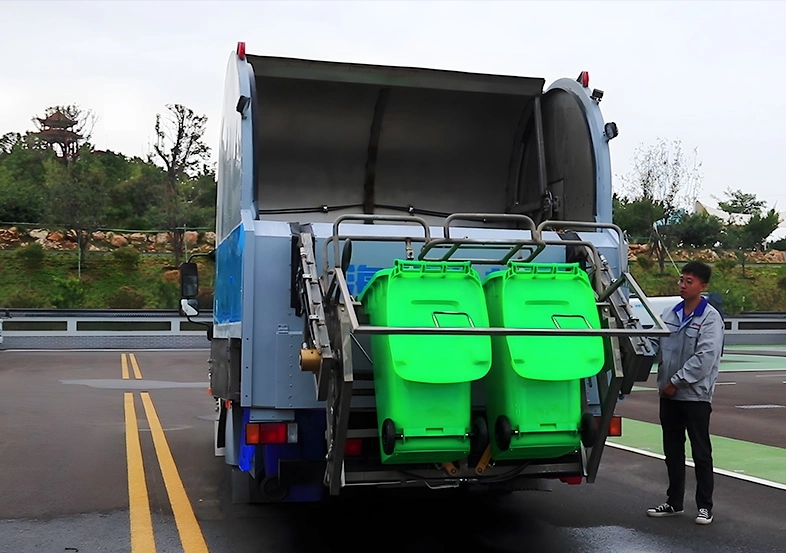
Manual bin washing often looks simple until the operator meets several bins with sticky food residue, lid grime, and dirty runoff in a busy service area. A hose and brush may loosen visible dirt, but they also create uncontrolled wastewater and leave the operator working around odor, overspray, and uneven cleaning pressure.
A commercial bin cleaning machine changes the workflow by lifting the container into a defined cleaning position, applying high-pressure water to internal and external surfaces, and collecting wastewater inside the equipment. That controlled process matters when bins are cleaned near apartments, markets, hospitals, schools, and public streets where sanitation work must be visible, orderly, and repeatable.
For a route-based service, the equipment also affects scheduling. A compact system may suit scattered 120L and 240L wheelie bins, while a larger dustbin cleaning truck is more practical when the route includes heavy community bins or mixed container sizes.
How a Bin Cleaning Machine Works
Secure the Bin Before Washing
A reliable process begins before the water starts. The bin must be lifted, held, and positioned so that the spray pattern reaches the interior walls, the bottom corners, and the underside of the lid without exposing the surrounding area to unnecessary splashing.
Haide Sweeper equipment descriptions include garbage bin flipping mechanisms, clamping or lifting systems, and enclosed cleaning chambers on relevant models. These features help turn a dirty container into a controlled cleaning object instead of an awkward manual task.
Wash Internal and External Surfaces
The inside of a wheelie bin needs focused water impact because residue often dries on the lower wall and base. High-pressure rotating nozzles are useful here because they move the water stream across the inner surface rather than depending on a single fixed spray direction.
Exterior cleaning is equally important. The lid, handle area, wheels, and outer walls are the parts people touch or see most often, so a bin washing machine should address both hygiene and appearance. Some Haide Sweeper dustbin cleaning trucks use enclosed spray bars or distributed water jets around the chamber to clean the outside while the bin is held inside the washing area.
Collect Wastewater Inside the System
Wastewater control is one of the strongest reasons to use purpose-built bin washing equipment. When runoff is allowed to spread across pavement, the cleaning job can simply move the contamination from the bin to the ground.
Haide Sweeper products in the dustbin cleaning series use separate clean water and wastewater arrangements on relevant models, allowing dirty water to be collected after washing. This supports cleaner job sites and a more professional service routine, especially where bins are cleaned in public or semi-public spaces.
Matching Equipment to a Service Route
Local Work With Pickup Mounted Equipment
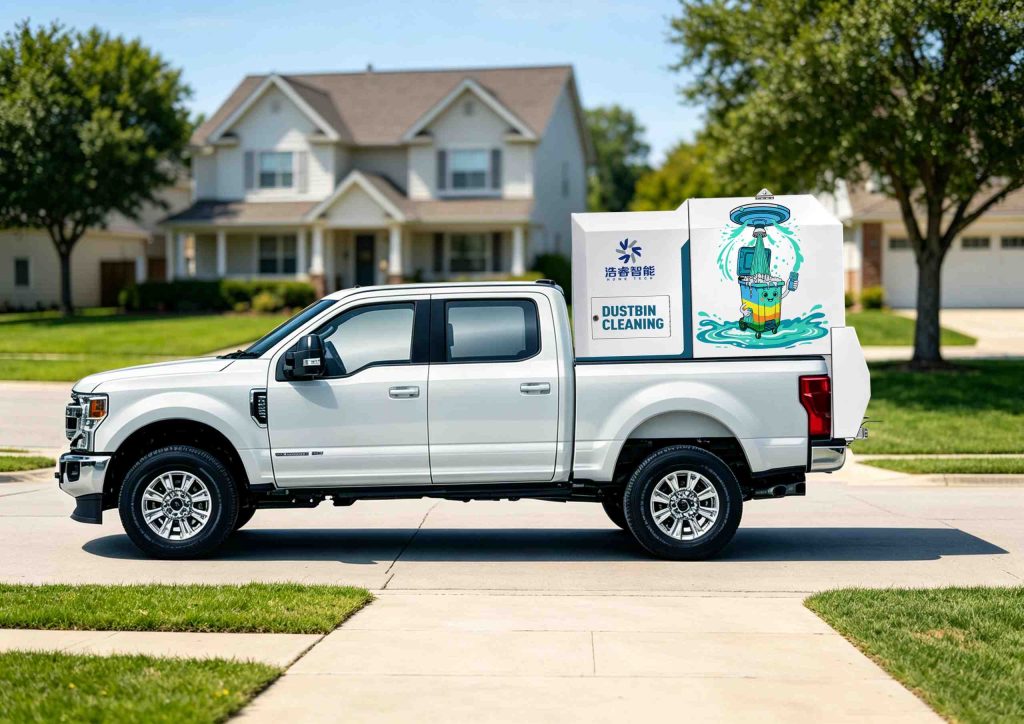
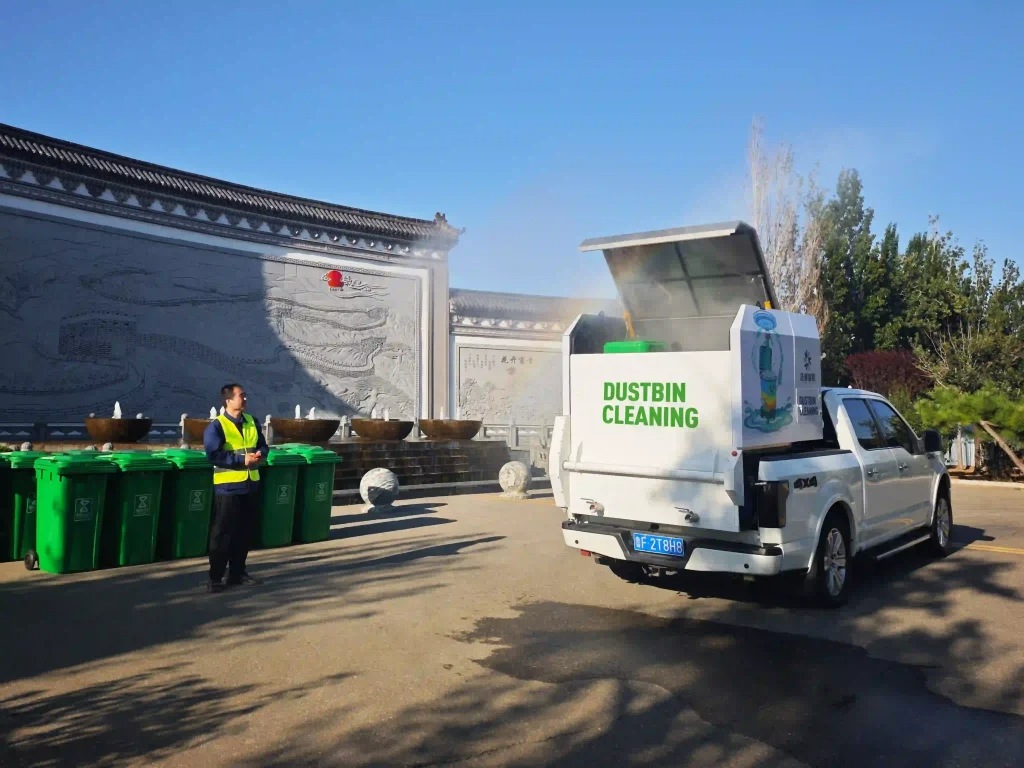
A pickup-mounted configuration suits small route clusters, property service teams, and operators that need to move between neighborhoods without deploying a larger truck. This type of wheelie bin cleaning machine is useful when most containers are 120L or 240L bins and service access is tight.
The product category for Haide Sweeper dustbin cleaning series includes pickup truck-mounted cleaning equipment, fixed stations, towed machines, and dustbin cleaning trucks. This range allows route planning to begin with the work pattern rather than with a single equipment assumption.
Flexible Routes With Towed Equipment
Towed bin washing equipment fits teams that need mobility but do not want to dedicate a full chassis to cleaning work. A trailer-mounted unit can be moved to property groups, waste transfer points, or centralized community areas where bins are gathered for cleaning.
This approach can be useful for seasonal cleaning programs, outsourced sanitation services, and facilities that need periodic deep cleaning rather than daily route coverage. The key is to confirm turning space, water supply plans, wastewater discharge points, and the container sizes that must be handled.
Larger Daily Work With Dustbin Cleaning Trucks
A dustbin cleaning truck becomes more practical when the route includes dense bin points, larger 660L or 1100L containers, or daily service expectations. Vehicle-mounted systems can carry more water, integrate lifting and washing functions, and support longer operating windows.
For example, the Camión de limpieza de contenedores de basura CHD5073TQXQLE6 is described for 120L, 240L, 660L, and 1100L dustbins. That makes it relevant where a route mixes small residential containers with larger public or commercial bins.
Cleaning Quality Depends on More Than Pressure
High pressure matters, but it is not the only factor behind a good result. The bin angle, nozzle movement, water temperature, cleaning cycle, and wastewater removal all influence whether residue is removed or merely loosened.
Hot water can help soften greasy residue and improve the cleaning effect in food waste areas, while adjustable cycles help operators respond to light, medium, or heavy soil levels. A service route that includes restaurant zones may need a different wash rhythm from a residential route where bins are cleaned mainly for odor control and appearance.
The operator also needs access to a handheld spray gun for details that automatic washing cannot always reach. Corners, wheels, and outer contact points may need spot cleaning before the bin is returned to service.
Dónde encaja Haide Sweeper
Haide Sweeper is a natural fit for teams that want to build a structured bin cleaning service rather than rely on improvised washing. The brand offers equipment formats for mobile cleaning, centralized washing, and truck-mounted service, which is useful when an operation grows from small wheelie bin routes into mixed-capacity public sanitation work.
For property managers, the main value is cleaner shared waste areas. For city sanitation teams, the value is consistent cleaning across many public points. For service contractors, the value is a more repeatable workflow that can be explained to clients without turning every job into a manual exception.
The best choice is not always the largest machine. A buyer should match the equipment to route density, bin size, available discharge points, water access, and the level of cleaning expected by the site.
Conclusión
A bin cleaning machine improves wheelie bin service routes by turning messy manual washing into a contained, repeatable sanitation process. With lifting mechanisms, high-pressure internal and external washing, temperature control on selected models, and wastewater collection, the equipment helps teams clean bins without creating a second mess around them.
Haide Sweeper gives operators several ways to build that process, from mobile cleaning equipment to full dustbin cleaning trucks for larger routes. Explore the dustbin cleaning equipment range to match the right system to your service route.
Preguntas frecuentes
Q: What is a bin cleaning machine used for?
A: A bin cleaning machine is used for cleaning the waste bins by spraying high pressure water under controlled conditions within an enclosed or partly enclosed space. It helps in removing the residue, minimizing odor, cleaning the touch points, and collecting the dirty water efficiently.
Q: Is a wheelie bin cleaning machine suitable for 120L and 240L bins?
A: Yes, most wheelie bin cleaning machines are engineered based on standard wheelie bins such as 120L and 240L plastic wheelie bins. However, some Haide Sweeper models can handle bigger wheelie bins, like 660L and 1100L wheelie bins. The appropriate model should be determined based on several factors.
Q: Why is wastewater collection important during bin washing?
A: Wastewater carries loose dirt, odour sources, and cleaning wastewater. Having it collected in the machine helps avoid dirty water being dispersed on roads, courtyards, and loading places. This ensures that the sanitation process is clean and well-organized.
Q: Should I choose mobile equipment or a dustbin cleaning truck?
A: Mobile equipment is useful for smaller routes, property groups, and flexible service points. A dustbin cleaning truck is better when the route is dense, the daily workload is higher, or larger 660L and 1100L containers must be cleaned regularly.