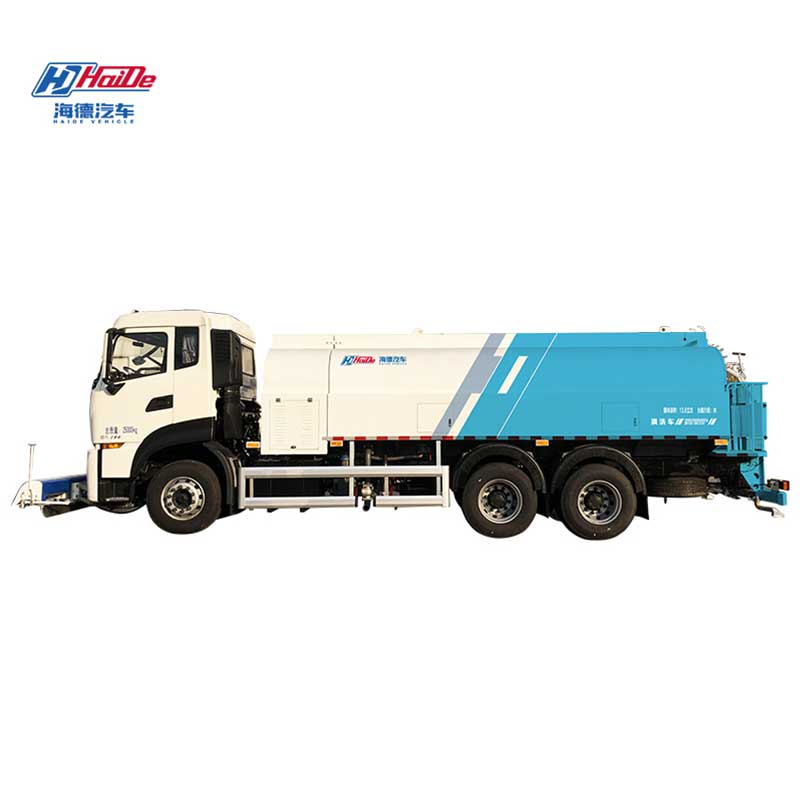
A road cleaning truck is useful when the problem on the street is not loose litter, but dust film, dried mud, curb sediment, and heat-baked grime that need controlled water. It washes pavement, knocks down dust, rinses road edges, supports green-area spraying, and gives crews one truck for routine routes as well as messy days after wind, dry weather, or storm runoff. Haide Sweeper fits that work with road cleaning vehicles built for pavement rinsing, daily sprinkling, road flushing, and multi-purpose public-space maintenance.
Why Road Cleaning Truck Selection Matters
City roads do not get dirty in one neat pattern. Fine tire dust settles on main avenues, mud sits along service-lane curbs, and plaza entrances may need a quick rinse before shops open. A sweeper can remove what is loose, but the thin gray film left behind is often the part residents notice.
For that reason, choosing a truck starts with the route, not the catalog. Road width, refill points, normal traffic speed, and the driver’s control workload all shape whether the truck feels helpful in daily service or slow and awkward by midmorning.
The small details show up fast. If the spray misses the curb, the road still looks unfinished. If switching functions takes too much attention, operators tend to avoid the feature. If refilling interrupts the route too often, the cleaning plan loses its rhythm.
What a Road Cleaning Truck Handles Better Than Basic Sweeping
A street sweeper earns its place with loose litter, leaves, sand, and visible debris. A road cleaning truck becomes the better choice when the surface itself needs rinsing, especially after dry weather, near construction exits, beside drains, or around public squares that need a cleaner finish before people arrive.
그만큼 Haide Sweeper road cleaning truck is built for that wider role. It supports pavement sprinkling, road rinsing, garden spraying, and auxiliary emergency water use, so the vehicle can stay useful across ordinary municipal tasks instead of waiting for occasional cleanup days.
Pavement Washing And Road Rinsing
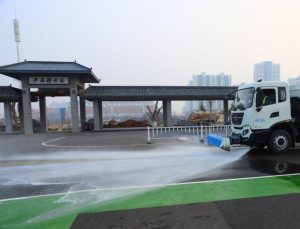
Pavement washing matters most when dust has been pressed into the road instead of sitting loose on top. Pressure loosens that layer, and water movement carries residue away from wheel paths, curb lines, and paved shoulders. The result is practical: less dust lift, cleaner edges, and a road that looks maintained rather than merely brushed.
On wider streets, coverage decides how many passes the crew needs. The CHD5250GQXDFE6 road cleaning truck lists a sprinkler width of at least 16 m and a flushing width of at least 24 m, which helps broad sections get covered without excessive repeat runs.
Dust Control During Dry Weather
Dust control is often linked with construction sites, but dry boulevards, logistics parks, bus stations, service roads, and industrial entrances need the same attention. Traffic keeps lifting fine particles even when the road looks acceptable from a distance.
A road cleaning truck helps by laying water in a controlled pattern instead of soaking one patch and missing the next. The vehicle’s sprinkler flow range of 500 to 800 L/min supports routine dust suppression, while the working speed range of 0 to 20 km/h gives operators room to adjust for traffic and stop density.
Green Area Spraying And Emergency Water Support
Municipal fleets rarely have a separate vehicle waiting for every small water job. A truck that can handle garden spraying and water gun operation can help with roadside greenery, public-space cooling, and one-off cleaning around parks, stations, highway service areas, or event routes.
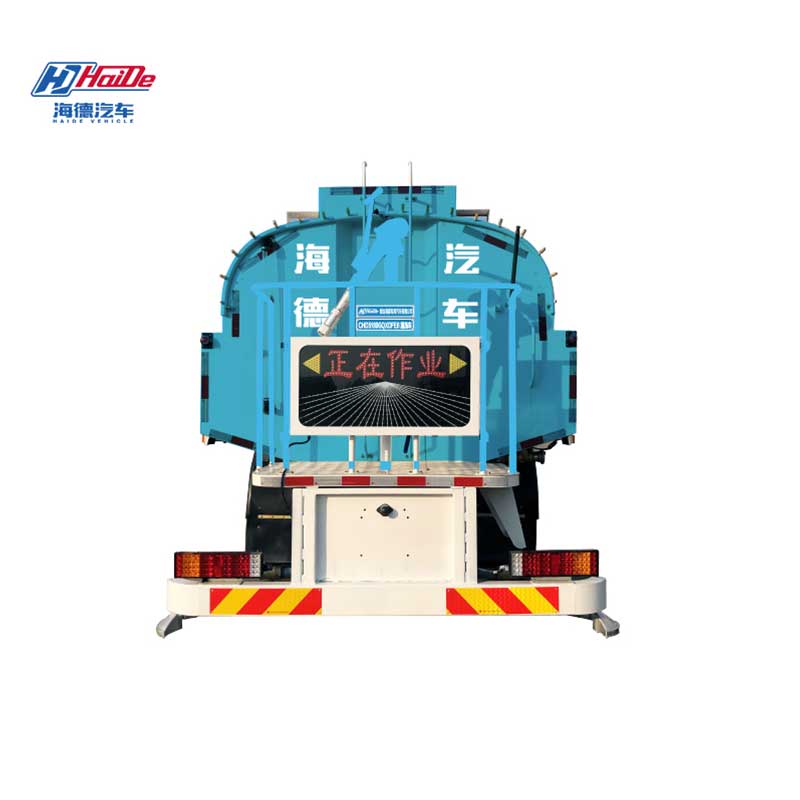
The rear working platform and long-range water gun make that flexibility useful in the field. A water gun range of 38 m gives operators enough reach to rinse awkward surfaces, spray vegetation, or handle auxiliary water work without moving the truck every few minutes.
Waterway Design Shapes Real Cleaning Performance
A practical road washing truck needs more than a pump and a row of nozzles. Separate high-pressure and low-pressure waterway systems let the operator rinse stubborn areas with more force, then switch to wider sprinkling where coverage matters more than impact.
The road cleaning truck design from Haide Sweeper uses independent high and low pressure systems, with front flushing, rear sprinkling, side washing, and adjustable spray angles. That mix suits routes that move from curb edges to wide avenues and then back into narrow service roads.
Low-water protection is easy to forget until the route goes wrong. A water-free alarm system helps prevent dry running and gives the operator a clear refill warning before pressure drops or components are strained.
Operator Control And Route Efficiency
Good cleaning equipment should take pressure off the operator, especially in traffic. Cab-based control, pneumatic valve operation, and one-click operation for low-pressure functions let the driver manage spray actions while still watching lanes, pedestrians, and parked vehicles.
Route efficiency often comes down to small movements. Smooth adjustment of flushing angle and spray width lets the operator work closer to curbs and barriers without wasting water on overlap or leaving a clear unwashed strip.
Lighting and rear operation signs also matter. They help following traffic notice the work zone, especially during early morning, evening, or low-visibility sanitation shifts.
Where Haide Sweeper Fits Road Maintenance Work
Haide Sweeper is most relevant where a fleet needs road cleaning equipment for routine public-service work, not a single-purpose machine parked between special jobs. The road sweeping and cleaning vehicle range covers road sweeping, washing, and related municipal cleaning tasks, giving fleet planners room to match equipment to pavement conditions.
For road cleaning, the practical question is not only whether the truck can spray water. It is whether operators have enough control over width, flow, pressure, refilling, and auxiliary work to keep daily routes moving without constant workarounds.
That makes Haide Sweeper a natural fit for sanitation departments, highway maintenance teams, and property service operators that want cleaner roads without treating every route as a separate equipment problem.
결론
A road cleaning truck delivers real value when water capacity, spray coverage, pressure control, and simple operation work together in daily service. For cities and facility operators, the payoff is straightforward: cleaner pavement, steadier dust control, and more flexible support for public spaces without adding unnecessary fleet complexity.
Haide Sweeper gives maintenance teams a practical path toward cleaner roads through road washing, sprinkling, curb rinsing, and auxiliary water functions built around real municipal routes.
탐구하다 Haide Sweeper service suppor티 to plan a road cleaning setup that fits your operating environment.
FAQ는
Q: What is a road cleaning truck used for?
A: A road cleaning truck is used for pavement washing, road rinsing, dust suppression, daily sprinkling, curb cleaning, and public-space maintenance. It is especially useful after dry weather, near curb sediment, or on surfaces where loose sweeping leaves road film behind.
Q: How is a road cleaning truck different from a street sweeper?
A: A street sweeper mainly collects loose debris with brushes and suction. A road cleaning truck focuses on water-based rinsing, washing, and dust suppression. Many municipal fleets use both because the two vehicles solve different parts of the same street-cleaning problem.
Q: Which specifications matter most for municipal road washing?
A: Useful specifications include water tank volume, sprinkler width, flushing width, water flow, water gun range, low-water protection, working speed, and operator control layout. These details affect pass count, traffic safety, refill planning, and how well the truck adapts to different road sections.
Q: Can one road cleaning truck support multiple city maintenance tasks?
A: Yes, if it has flexible waterway functions. A multi-purpose road cleaning truck can support pavement flushing, daily sprinkling, garden spraying, cooling, auxiliary water supply, and dust control. The right fit depends on route width, refill access, cleaning frequency, and the need for high-pressure and low-pressure modes.