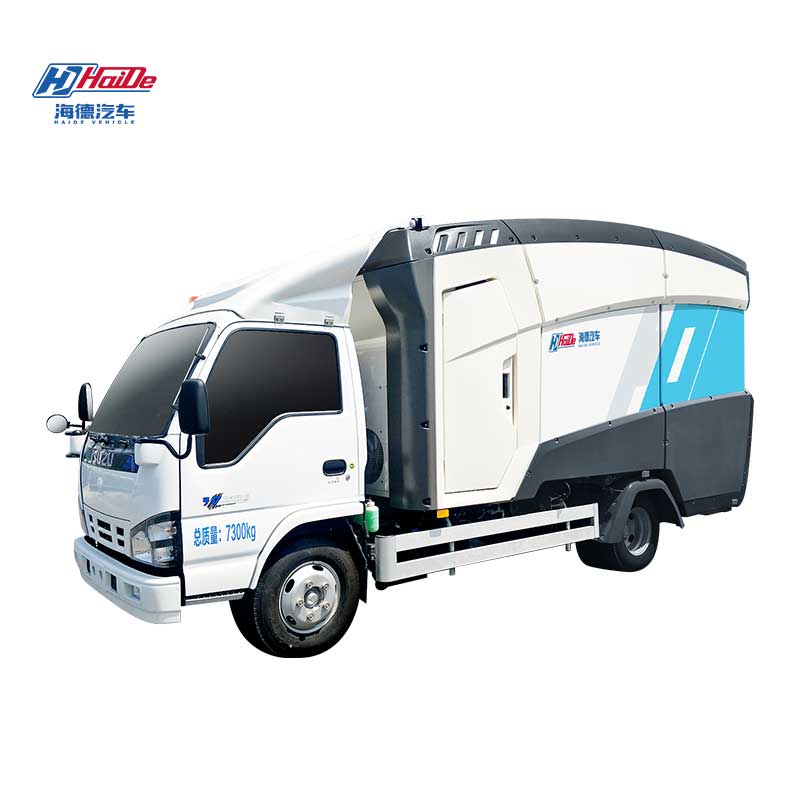
A dustbin cleaning truck is the right fit when a sanitation team has to wash different container sizes on the same route and still keep the work contained, fast, and orderly. Among different types of garbage bin cleaning equipment, it is especially useful when crews must bring washing, lifting, rinsing, and wastewater control directly to the bin location.
A route with 120L community bins, 240L estate bins, and larger 660L or 1100L containers does not behave like a single-size program. The best waste bin cleaning result comes from matching the machine to the route pattern, the bin size, and the cleaning point, not from forcing every stop through the same workflow.
How to Plan a Dustbin Cleaning Truck Route
Route planning should decide whether one vehicle can cover scattered bins or whether one enclosed cleaning point is more efficient. If the machine spends too long repositioning or emptying, the route loses its rhythm. That is why the dustbin cleaning truck should be chosen as part of the daily workflow, not as a standalone equipment decision.
In dense neighborhoods, short dwell times matter. One cleaning cycle that can handle one or two smaller bins quickly is often more useful than a larger machine that creates congestion at every stop. In more open routes, larger bins and fewer stops make higher-capacity cleaning more attractive.
Wastewater is the hidden part of bin hygiene. If dirty water runs across curbs or yard surfaces, the team finishes one task and starts another. An enclosed bin washing system with wastewater separation keeps the area tidier and reduces the chance that clean bins leave a dirty footprint.
Where the Rear-Loading Truck Works Best
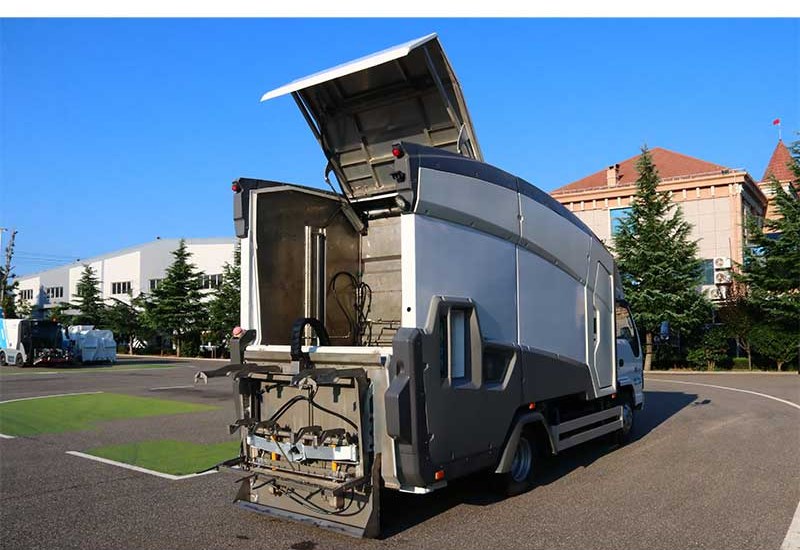
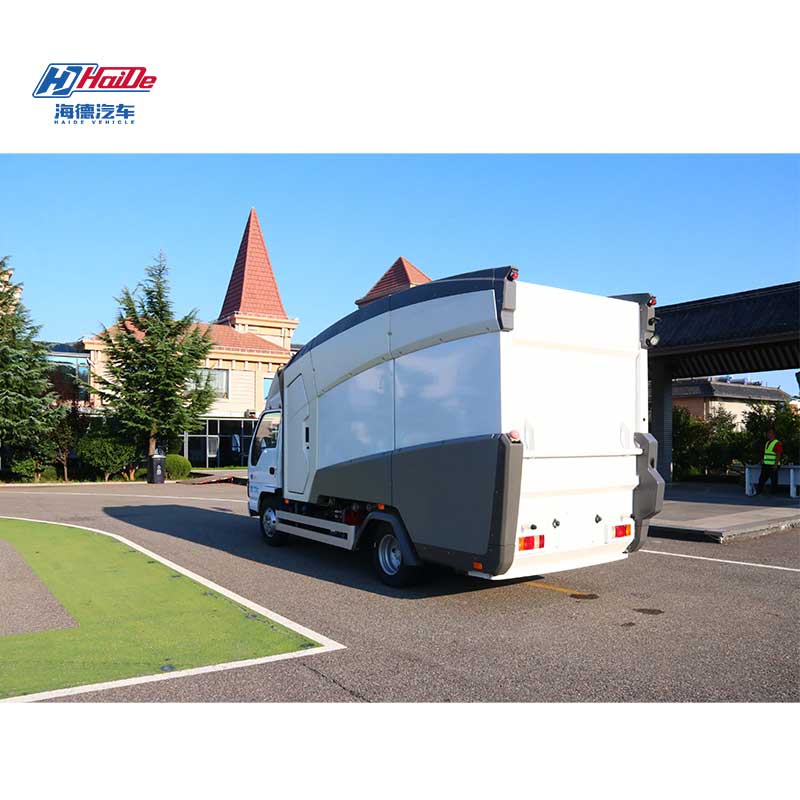
Der CHD5073TQXQLE6 dustbin cleaning truck fits routes where urban and rural roads share different bin sizes. Its rear-loading, fully enclosed layout is useful when crews need to wash 120L, 240L, 660L, and 1100L bins without moving them to a fixed bay. Since it can clean 120 small bins or 60 large bins with full water, it is better suited to repeated field work than to a one-off wash point.
That kind of capacity matters when routes combine residential streets with markets, roadside collection points, and public-service areas. The machine can wash one to two smaller bins per batch or one large bin at a time, which helps the team keep pace without turning every stop into a long service event.
On urban roads, the rear-loading bin washing truck is valuable because bins often sit close to traffic, pedestrians, and parked vehicles. On rural roads, it brings the washing process to places where a fixed station would be impractical. The enclosed design also helps keep the work calmer in public view.
When a Towed Bin Washer Makes More Sense
A towable unit is often the smarter choice when cleaning happens at centralized locations. The CHD103TQX towed bin washing machine is built for trailer traction mounting, so it can move between sites without permanent installation. It handles 120L, 240L, and 660L bins and suits teams that want mobility without bringing a large truck into every clean point.
The attraction of the towable format is its control. As a mobile bin washer, the machine uses high-pressure cleaning, automatic turnover clamping, and wastewater recycling, so the team can wash bins in a compact operational area without setting up a fixed bay. For campuses, depots, or shared service yards, that can be a cleaner fit than a larger truck.
Centralized yards usually have the best water access, the simplest drainage, and the least traffic interruption. That makes them suitable for a machine that can work steadily through a batch instead of traveling after each individual bin. A towable washer is often easier to stage, refuel, and reposition in these conditions.
The CHD103TQX supports a cycle time of at least one minute, with adjustment based on actual working conditions. It also uses a DN65 fire hydrant connector for quick refilling, which supports a more fluid workflow when multiple bins are waiting. In practical terms, that can mean less waiting and a more predictable wash rhythm.
What the Cleaning Cycle Has to Remove
Good bin washing is not just about splash coverage. The inside floor, corners, lid edge, and wheel area all hold residue that creates odor and makes later handling unpleasant. A useful cleaning cycle reaches those details with enough pressure and rotation to remove grime before it dries hard.
On mixed routes, the dirtiest bins are usually the ones closest to food waste or wet refuse. A 360-degree rotating nozzle and surrounding spray bars help reach those hidden surfaces without relying on manual touch-up. That matters because the more a crew has to hand-finish, the slower the route becomes.
Automatic clamping and monitored controls make the job steadier. When a bin is locked in place and the operator can watch the cleaning status from a display, the wash cycle becomes more repeatable. It is a small detail that protects both the container and the operator’s time.
How Haide Sweeper Fits the Workflow
Haide Sweeper makes the most sense when the conversation starts with route design instead of machine bragging. The Haide Sweeper dustbin cleaning series covers both enclosed truck-mounted work and towed mobile washing, so teams can match the layout to the route. That flexibility is useful when one city or facility does not have only one bin size or one kind of collection point.
For managers comparing mixed-bin routes, the decision usually comes down to three questions: how far the bins are from one another, how much wastewater must be contained, and how often large bins appear on the same route. Once those are clear, choosing between the truck and the towed unit becomes much easier.
Abschluss
A dustbin cleaning truck delivers the most value when it is matched to the route, not when it is judged only by a headline capacity figure. Mixed bin sizes call for a system that can wash thoroughly, contain wastewater, and keep stops moving without turning every collection point into a mess. That is the real advantage of a well-planned sanitation workflow.
When the route is ready, the machine choice becomes simple.
Erkunden Sie die Haide Sweeper Mülleimer-Reinigungsserie to align the right washing layout with your bin sizes and working pattern.
FAQ (häufig gestellte Fragen)
Q: What kind of route is best for a dustbin cleaning truck?
A: A towed washer works best when bins are cleaned at a centralized yard or service point. It is easier to stage where water access, drainage, and batch washing matter more than road mobility. If the bins come to the machine, a towable unit can be the cleaner, simpler choice.
Q: When should a team choose a towed bin washer instead?
A: A towed washer works best when bins are cleaned at a centralized yard or service point. It is easier to stage where water access, drainage, and batch washing matter more than road mobility. If the bins come to the machine, a towable unit can be the cleaner, simpler choice.
Q: Why does wastewater control matter so much?
A: Wastewater control keeps the wash process from creating new dirt around the bin area. If dirty water spreads across pavements or yards, the route loses time, and the site looks worse after cleaning. Enclosed washing and recycling help keep the work area orderly and reduce unnecessary runoff.
Q: What should matter more, bin size or cycle speed?
A: Both matter, but bin size should come first. There is no use in having a quick cycle if the equipment will not accommodate the bins along the way. After determining the compatibility, the cycle time will determine how much workload can be done within a shift and when repositioning of the vehicle is required.