Un camión de limpieza de contenedores limpia los recipientes de basura donde se generan olores, residuos y aguas residuales: en el interior del contenedor, alrededor de la tapa y en el punto de carga. En lugar de trasladar los contenedores a una zona de lavado o enjuagarlos en la vía pública, un sistema móvil lleva el lavado a alta presión, la contención de aguas residuales y la operación basada en rutas al área de recolección. Para los equipos de saneamiento, el beneficio es simple: contenedores más limpios, menos salpicaduras, mejor control de las aguas residuales y menos quejas en los puntos de recolección de residuos residenciales, comerciales y públicos.
Por qué la higiene de los contenedores depende del lavado contenido
Un contenedor de basura público entra en contacto con muchos materiales. Restos de comida, líquidos de envases, polvo, hojas y basura dejan residuos. Si el personal solo rocía el exterior, el contenedor puede parecer presentable desde la distancia, mientras que la pared interior seguirá reteniendo el mal olor.
La limpieza de contenedores de residuos en interiores modifica el flujo de trabajo. El contenedor se coloca en una cámara o área de lavado controlada, el agua a alta presión penetra en su interior y el líquido sucio se desvía lejos del pavimento. Esto es especialmente importante cerca de apartamentos, mercados, campus universitarios, paradas de transporte público, parques y vías de servicio, donde los contenedores se encuentran cerca de las personas a diario.
El olor comienza dentro del cubo de basura
El control de olores comienza con la eliminación de los residuos que los alimentan. Un lavador de contenedores móvil debe llegar al suelo, las paredes laterales, las esquinas, los puntos de contacto con la tapa y la zona de las ruedas, no solo a la superficie exterior. El agua caliente o a alta presión puede aflojar los materiales pegajosos con mayor eficacia que un simple enjuague con manguera, especialmente después de que los restos de comida o la basura húmeda se hayan secado en la superficie.
barridora Haide Estas soluciones resultan útiles en este contexto, ya que varias máquinas están diseñadas para una limpieza controlada o en espacios cerrados, en lugar de la pulverización abierta. El objetivo no es perfumar el contenedor, sino eliminar los residuos acumulados que provocan el mal olor una vez que se calienta.
El control de aguas residuales protege la zona de limpieza.
El agua sucia generada durante el lavado de los contenedores de basura es parte del trabajo, no un detalle secundario. Si se derrama sobre una acera o bordillo, la limpieza crea un nuevo problema de higiene y aspecto. Un sistema práctico de lavado de contenedores mantiene separadas el agua limpia, el agua de lavado y las aguas residuales recogidas en la medida en que lo permite el diseño de la máquina.
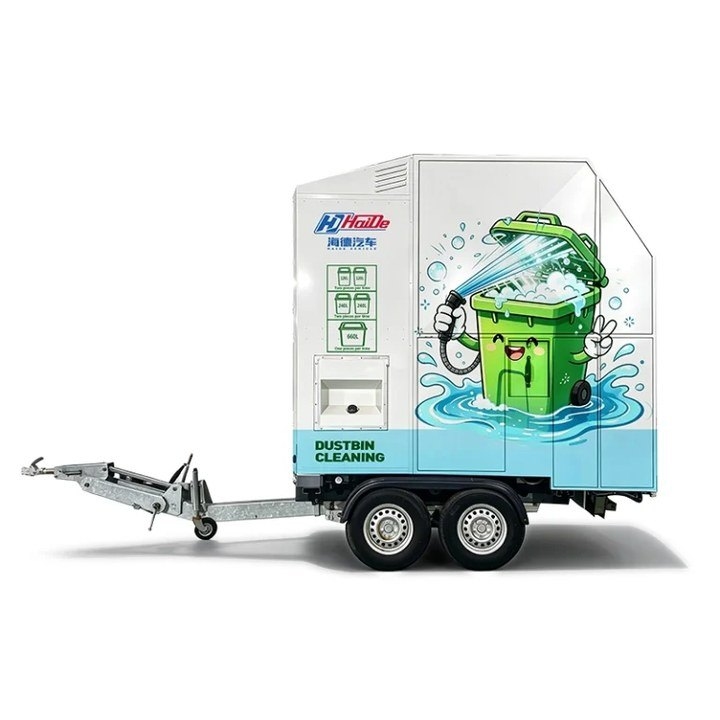
Para los equipos que trabajan en zonas con acceso limitado al desagüe, el almacenamiento y la reutilización de aguas residuales pueden ampliar la ruta y reducir la demanda de agua dulce. Lavadora de contenedores remolcable CHD103TQX Utiliza un sistema móvil montado sobre remolque con limpieza a alta temperatura y alta presión, sujeción automática y reciclaje de aguas residuales para contenedores de 120 L, 240 L y 660 L. Esta combinación resulta ideal para puntos de limpieza donde los equipos necesitan movilidad y un manejo adecuado de las aguas residuales.
Cómo funciona un camión de limpieza de contenedores de basura
Para quienes se pregunten cómo funciona un camión de limpieza de contenedores, la respuesta es un ciclo repetible: se coloca el contenedor, se lavan las superficies interiores, se enjuaga el exterior, se recogen las aguas residuales y se continúa. Los detalles varían según el tamaño de la máquina, pero el trabajo debe ser lo suficientemente rápido para las rutas habituales y lo suficientemente controlado para las zonas públicas.
Cámaras cerradas y boquillas giratorias
Dentro de la cámara de limpieza, el contenedor se puede invertir o mantener en una posición controlada mientras unas boquillas giratorias rocían el interior. Aquí es donde el proceso se diferencia del lavado manual. El agua alcanza superficies que, de otro modo, los operarios no alcanzarían o tardarían demasiado en limpiar con una pistola de agua manual.
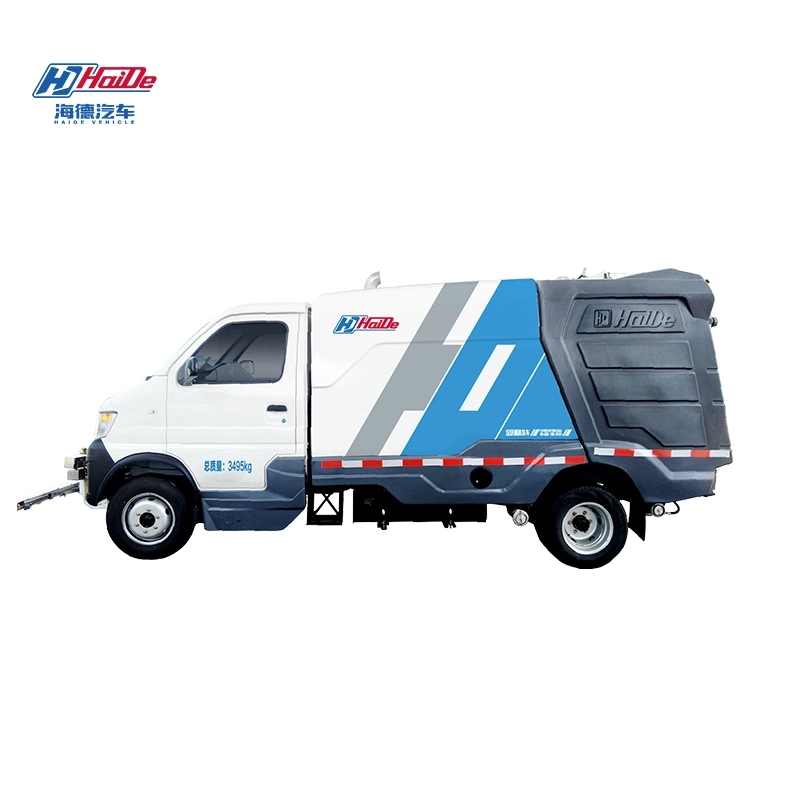
El Limpiador de cubos de basura CHD5030TQXCAE6 Está diseñado para contenedores de residuos de 120 y 240 litros y utiliza una cámara de lavado a alta presión de 360 grados. Sus depósitos de agua y aguas residuales le permiten funcionar como un vehículo de ruta compacto, mientras que el rango de temperatura del agua de salida, de 40 a 80 grados Celsius, ofrece a los operarios una opción de limpieza más cálida cuando los residuos son difíciles de eliminar.
Enjuague exterior de tapas, ruedas y áreas circundantes.
El exterior de un contenedor sigue siendo importante. Las tapas recogen salpicaduras, las asas acumulan suciedad y las ruedas recogen el agua sucia de los puntos de recogida. Una lavadora de contenedores bien diseñada debe facilitar la limpieza interna y externa, prestando especial atención a los detalles que afectan al uso diario.
Adaptación del servicio móvil de lavado de contenedores a las rutas reales.
La lavadora móvil de contenedores más adecuada se elige en función de la ruta de recogida. Una lavadora móvil para contenedores de 120 y 240 litros puede ser apropiada para una ruta comunitaria, mientras que un distrito comercial o un programa rural en carretera puede requerir una configuración diferente. El tamaño de los contenedores, la distancia de recorrido, el acceso al agua, los puntos de descarga y la cantidad de contenedores por turno son factores determinantes en la elección.
Comunidades residenciales, callejones y caminos estrechos
Los puntos de limpieza pequeños requieren equipos que puedan llegar sin bloquear toda la zona. Una unidad remolcable o tipo camioneta es ideal para contenedores dispersos en urbanizaciones, escuelas, parques y vías de servicio donde un camión más grande no sea necesario. El trabajo sigue siendo profesional, pero la máquina no acapara la atención en el recorrido.
Para contenedores de plástico de 120 y 240 litros, los sistemas compactos resultan especialmente prácticos, ya que estos tamaños son habituales en los puntos de recogida habituales. El CHD103TQX está diseñado para su montaje sobre remolque y no requiere instalación fija, lo que ofrece a los equipos una forma flexible de prestar servicio en los puntos de recogida sin necesidad de construir una estación de lavado en cada ubicación.
Carreteras urbanas y rurales con contenedores de basura más grandes.
Los contenedores de mayor tamaño alteran el ritmo de trabajo. Un contenedor de 660 o 1100 litros es más difícil de reposicionar manualmente y genera más aguas residuales durante la limpieza. Para un camión de limpieza de contenedores que opera en vías urbanas y rurales, un camión de lavado cerrado con carga trasera puede reducir la manipulación manual y mantener el proceso más ordenado.
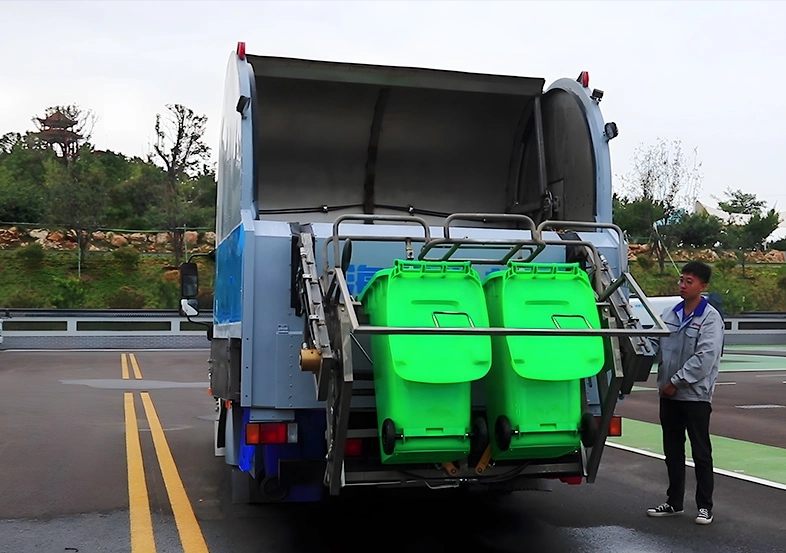
El Camión de limpieza de contenedores de basura CHD5120TQXDFE6 Se trata de un camión de lavado trasero totalmente cerrado para contenedores de basura estándar de 120 L, 240 L, 660 L y 1100 L. Está diseñado para la limpieza de contenedores en carreteras urbanas y rurales, lo que lo convierte en una opción relevante cuando un equipo de saneamiento necesita una plataforma para contenedores de diferentes tamaños a lo largo de una ruta extensa.
Puntos de limpieza fijos para cargas de trabajo centralizadas
No todos los programas requieren un camión para cada contenedor. Cuando los contenedores ya se recolectan en un depósito, mercado, punto de transferencia o patio de la instalación, una estación fija puede ser más fácil de administrar. Mantiene el agua, la energía, el drenaje y el movimiento del personal concentrados en un área controlada.
Qué comparar antes de elegir
La primera comparación se refiere a la compatibilidad de los contenedores. Los equipos de limpieza para contenedores de 120 L y 240 L pueden no requerir la misma estructura de elevación que los utilizados para rutas con contenedores de 660 L y 1100 L. Un tamaño excesivo puede complicar una ruta corta, mientras que un tamaño insuficiente puede dificultar el manejo de los contenedores grandes y obligar a realizar paradas frecuentes para reabastecerse de agua.
La planificación hídrica es el siguiente paso. La capacidad de agua potable, la capacidad de aguas residuales, la temperatura de lavado, la presión, el caudal y el acceso a la descarga influyen en la productividad. Para los equipos que consideran la limpieza de contenedores con reciclaje de aguas residuales, las características de recuperación y purificación pueden ser especialmente relevantes. La decisión debe tener en cuenta la distancia de desplazamiento, el estado del contenedor y la gestión responsable de las aguas residuales.
Dónde encaja Haide Sweeper
Haide Sweeper cubre el lavado móvil remolcado, la limpieza de microvehículos, el lavado de camiones cerrados de carga trasera y las estaciones fijas. Los equipos que buscan controlar el olor al limpiar contenedores de basura pueden comenzar por adaptar el método a los residuos, la ruta y el tamaño del contenedor. El CHD103TQX admite el reciclaje móvil de aguas residuales para contenedores de 120 L, 240 L y 660 L; el CHD5030TQXCAE6 es adecuado para contenedores de 120 L y 240 L, mientras que el CHD5120TQXDFE6 maneja rutas que incluyen contenedores de 660 L y 1100 L.
Conclusión
Un camión de limpieza de contenedores trata la higiene de los mismos como un proceso controlado, no como un simple enjuague. Llega al interior del contenedor, facilita el acabado exterior, mantiene las aguas residuales dentro del flujo de trabajo y ayuda a los equipos a desplazarse con fluidez entre los puntos de recogida de contenedores. Por eso, el lavado móvil de contenedores es fundamental en zonas donde confluyen olores, residuos y puntos de recogida de residuos de acceso público.
Haide Sweeper conecta esa necesidad práctica con diversas configuraciones de equipos, desde unidades móviles remolcadas hasta camiones cerrados de carga trasera y estaciones fijas.
Explora el Serie de limpieza de contenedores de basura Haide Sweeper para que el estilo de la máquina se ajuste al tamaño de sus contenedores, las condiciones de la ruta y el flujo de trabajo de limpieza.
Preguntas frecuentes
P: ¿Para qué se utiliza un camión de limpieza de contenedores de basura?
A: El vehículo de limpieza de contenedores se utiliza para limpiar los contenedores de basura en las inmediaciones de su punto de recogida habitual. El vehículo es un medio eficaz para limpiar el interior, las tapas, las ruedas y el exterior de los contenedores. Esto resulta especialmente útil en zonas residenciales, mercados, parques y centros educativos.
P: ¿Cómo controla una lavadora de contenedores móvil las aguas residuales?
A: Una lavadora móvil de contenedores controla las aguas residuales manteniendo el proceso de lavado dentro de una cámara o área de trabajo controlada, para luego dirigir el líquido sucio a un tanque de aguas residuales o a un sistema de recuperación. Algunos sistemas también permiten la purificación mediante circulación de aguas residuales. Esto reduce la escorrentía en el pavimento y ayuda a los operarios a mantener más limpia la zona de recogida de contenedores tras el lavado.
P: ¿Puede una misma lavadora de contenedores limpiar contenedores de diferentes tamaños?
R: Depende del diseño de la máquina. Algunas unidades compactas se centran en contenedores de plástico de 120 L y 240 L, mientras que los camiones cerrados de carga trasera más grandes pueden manejar contenedores de basura estándar de 120 L, 240 L, 660 L y 1100 L. La elección correcta debe coincidir con los tamaños de los contenedores utilizados en la ruta, en lugar de asumir que un solo sistema sirve para todos los contenedores.
P: ¿Es mejor una estación fija de limpieza de contenedores que un sistema montado en un camión?
A: La estación fija de lavado de contenedores es la mejor opción cuando los contenedores se recogen en un depósito central. Una unidad móvil de lavado sería más apropiada cuando los contenedores están dispersos por calles, barrios, parques o zonas comerciales. La elección del tipo de estación de limpieza debe depender del desplazamiento.