A dustbin cleaning truck is the right choice when waste bins must be cleaned along daily urban routes, while a trailer-mounted bin washing machine or fixed bin cleaning station can suit smaller zones or centralized depots. The best waste bin cleaning solution depends on route distance, bin volume, water supply, wastewater handling, and hot-water cleaning frequency. Haide Sweeper covers all three formats, so the decision should match equipment to the real sanitation workflow.
Why Dustbin Cleaning Truck Selection Matters for Modern Sanitation
Waste bins affect public hygiene, odor control, and street appearance. When residue remains inside 120L, 240L, 660L, or larger bins, it attracts insects, spreads odors, and makes collection points harder to manage. A structured cleaning system helps municipalities, property managers, hospitals, markets, and commercial districts move beyond manual rinsing.
The key is choosing the right format. A dustbin cleaning truck gives crews mobility and onboard capacity for scheduled routes. A compact bin washing machine serves distributed neighborhoods, while a fixed station supports repeatable cleaning at depots or transfer points.
How Different Waste Bin Cleaning Solutions Work
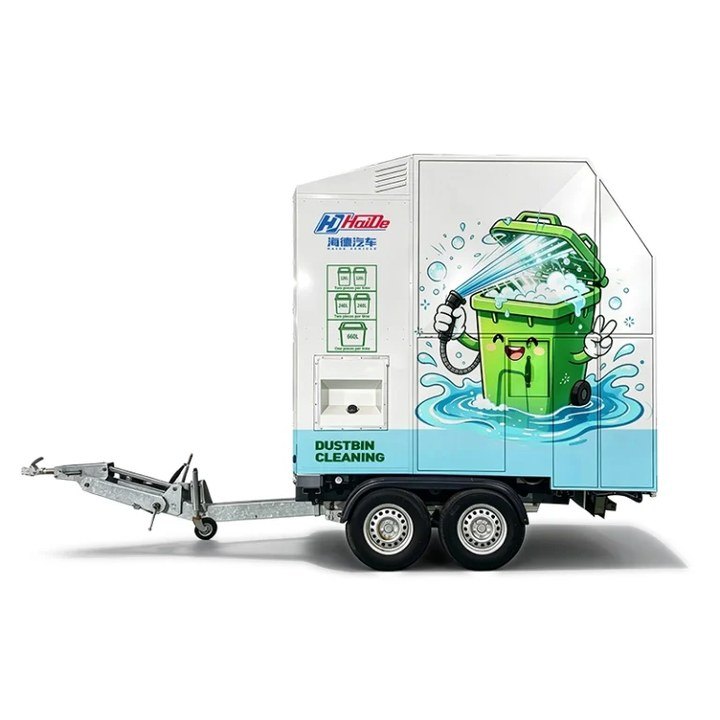
Trailer-Mounted Bin Washing for Flexible Routes
Haide Sweeper’s trailer-mounted bin washing machine range is designed for mobile operation where the cleaning unit needs to move between service points but does not need to be built permanently onto a truck chassis. The CHD103TQX Towed Bin Washing Machine uses a towed structure, a DN65 fire hydrant water supply connector, a 500L clean water tank, and a fully enclosed washing chamber. It supports standard 120L, 240L, and 660L waste bins, making it suitable for communities, parks, campuses, and service zones where bin sizes vary.
The CHD100TQX Compact Multi-functional Bin Washing Machine adds flexibility with quick switching between single-axle trailer-towed operation and pickup truck-mounted operation. Its upside-down washing process places the bin opening downward inside the sealed chamber, where a 360-degree high-pressure rotating spray nozzle cleans the internal walls. A handheld spray gun supports exterior washing and targeted disinfectant or cleaning-solution spraying.
Fixed Bins Cleaning Station for Centralized Cleaning
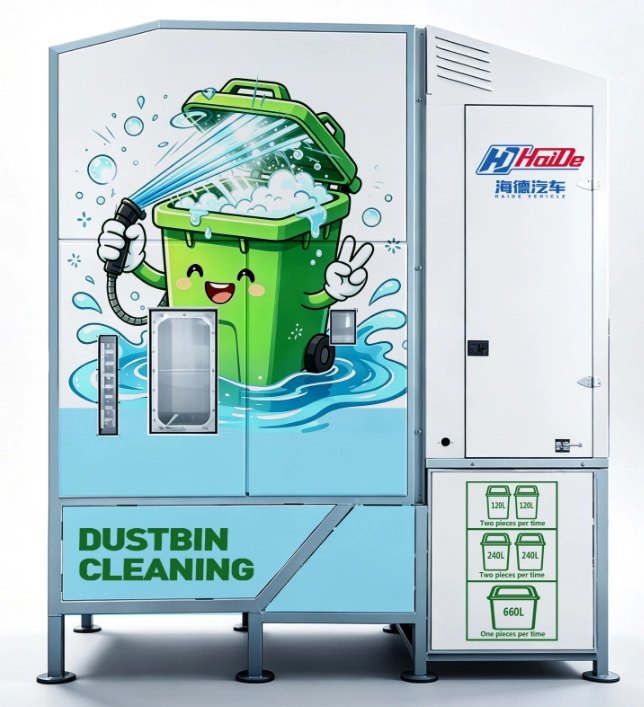
For depots and controlled sites, the fixed bins cleaning station format reduces travel time and keeps cleaning activity in one managed location. The CHD0101QXZ Bins Cleaning Station uses a fully enclosed high-pressure cleaning system and supports 120L, 240L, and 660L dustbins. It can clean one 660L bin or one to two 120L or 240L bins per session, depending on bin size and operation mode.
This format fits transfer stations, service yards, logistics parks, and property groups that can bring bins to a central cleaning point. Selectable light, medium, and heavy modes adapt the wash cycle to the level of contamination. A 380V AC motor, compressor-supported air supply, and DN65 fire hydrant fitting suit fixed infrastructure.
Dustbin Cleaning Truck for Daily Urban Operations
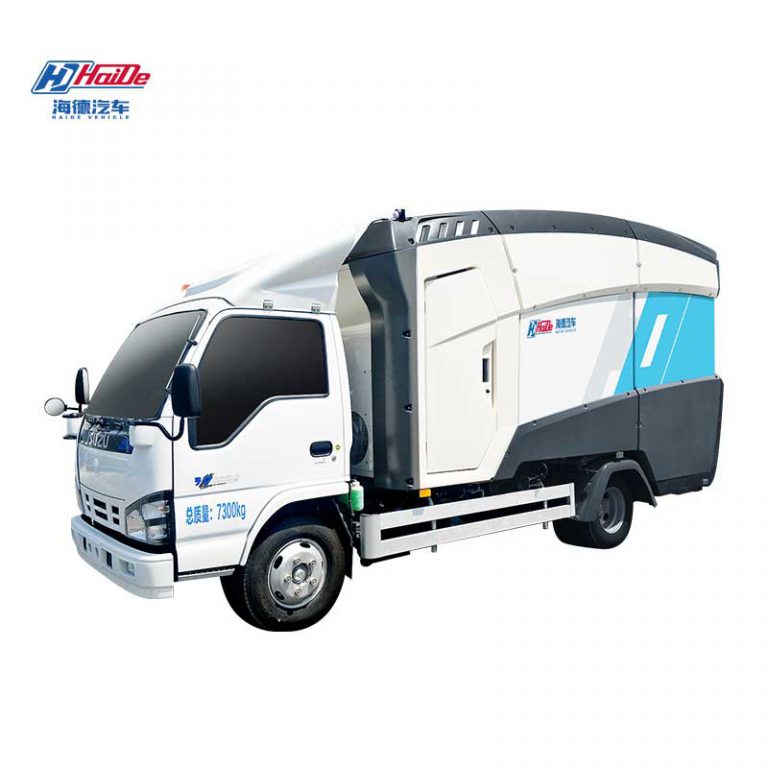
A dustbin cleaning truck becomes valuable when cleaning needs to happen directly along collection routes. Haide Sweeper’s truck-mounted options include compact and larger vehicles designed to clean bins while moving through neighborhoods, streets, markets, and public-service routes. The CHD5073TQXQLE6, for example, applies to 120L, 240L, 660L, and 1100L bins and carries separate clean-water and sewage-water tank volumes of 3.2m³ and 2.8m³.
Truck-mounted cleaning supports higher daily coverage because water, wastewater collection, heating, lifting, and control systems travel together. The CHD5030TQXCAE6 is compact enough for congested traffic conditions, while the CHD5120TQXDFE6 uses a high-pressure pump rated at 16MPa with a 130L/min rated flow. This configuration helps city sanitation teams align washing schedules with collection routes.
Features That Improve Cleaning Quality
Enclosed Chambers and Rotating Spray Coverage
A useful waste bin cleaning solution must reach inner walls, bottom grooves, rim areas, and outer surfaces where residue collects. Several Haide Sweeper products use enclosed washing chambers and rotating high-pressure nozzles to reduce blind spots. The CHD103TQX combines dual rotating nozzles, surround spray bars, and a handheld spray gun for internal and external cleaning.
The CHD5120TQXDFE6 uses a high-pressure rotating nozzle inside the cleaning compartment, while water jets around the compartment wash the bin exterior. Its 360-degree rotating washing tank cleans from multiple angles and helps remove water from grooves during rotation. This matters because the dirtiest zones are often corners, ribs, handles, and recesses.
Hot Water and High Pressure for Residue Removal
High pressure loosens dirt, while warm water helps dissolve greasy residues and odor-causing buildup. The CHD103TQX and CHD5073TQXQLE6 list a dustbin outlet or heated water outlet temperature of 60-80°C; the CHD5030TQXCAE6 and CHD0101QXZ list 40-80°C. These ranges suit food-waste bins, public-area bins, and sites where odor control matters.
Hot-water bin cleaning is more than a cosmetic step. When combined with enclosed spraying and controlled drainage, it supports cleaner handling conditions and reduces wastewater splash around collection points. That is especially important in hospitals, clinics, schools, residential communities, and commercial food-service areas.
Wastewater Collection and Cleaner Site Management
Manual washing often moves contamination from the bin to the pavement. A more complete garbage bin cleaning process captures wastewater and separates it from clean water, helping operators keep the work area tidy. Haide Sweeper products include clean-water and sewage-tank configurations, gravity-fed or pump-assisted sewage collection on the CHD100TQX, and optional wastewater recycling and reuse on selected systems.
A small team serving spread-out bins may value compact mobility and quick setup. A depot cleaning hundreds of bins may prioritize fixed power, stable water supply, and repeatable cycles. A municipal route with larger bins may need a dustbin cleaning truck with onboard water, sewage capacity, and automated lifting.
Where Haide Sweeper Solutions Fit Best
For residential communities, the main challenge is odor buildup in shared bins and limited operating space. A compact bin washing machine can clean 120L and 240L bins without requiring a large truck at every stop. Longer routes may need a dustbin cleaning truck instead.
For hospitals, clinics, and health-related facilities, cleaning frequency and residue control are more sensitive. For markets, commercial kitchens, and high-traffic public spaces, grease and organic residue are the main concerns. Heated water, 360-degree spray coverage, and wastewater collection help operators clean bins without turning nearby pavement into a second sanitation problem.
Choosing Between Trailer-Mounted, Fixed, and Truck-Mounted Systems
Choose trailer-mounted equipment when the route requires mobility but not a full dedicated truck. It suits contractors, campuses, parks, and mixed-property service areas.
Choose a fixed bin cleaning station when bins can be cleaned at a controlled site. The CHD0101QXZ supports different bin sizes and selectable modes, making it useful where operators want repeatable washing and stable utility connections. It is less about route flexibility and more about consistent cleaning quality.
Select a dustbin cleaning vehicle in cases where cleaning should be done in accordance with the city rather than vice versa. The advantages of truck-based systems can be noted especially in the case of municipal routes, large residential areas, and contractors.
Conclusion
The best dustbin cleaning truck is not simply the largest vehicle or the highest-pressure system; it is the solution that matches bin sizes, cleaning frequency, route length, water access, and wastewater management. Trailer-mounted machines bring flexibility, fixed stations bring repeatability, and truck-mounted systems bring route-based productivity. Haide Sweeper helps teams match cleaning technology to real operating conditions.
Explore the Haide Sweeper dustbin cleaning solutions that fit your operating scenario.
FAQ
Q: What is the main advantage of a dustbin cleaning truck?
A: Dustbin cleaning trucks have cleaning, lifting, water supply, wastewater collection, and control systems integrated into one mobile unit. The vehicle is best suited for urban routes, large residential areas, and contractors cleaning dustbins at various sites without going back to one fixed depot.
Q: When is a trailer-mounted bin washing machine a better choice?
A: Trailer equipment is helpful when mobility is needed, but there is no need for a cleaning vehicle. It is ideal for college and university campuses, communities, parks, and contractors whose clients are spread out across multiple locations.
Q: Why does wastewater collection matter in garbage bin cleaning?
A: The collection of wastewater avoids the contamination of pavement surfaces, yards, and collection sites by dirty water used for washing. The procedure becomes more systematic in public places, food service areas, and high-traffic pathways. The presence of clean water and sewage water tanks helps control the procedure.