A bin cleaning machine improves waste bin hygiene by combining heated water or steam with high-pressure spray, enclosed washing, and controlled wastewater collection. For standard 120L and 240L plastic bins, the CHR01QXP Pickup Truck-mounted Dustbin Cleaner gives sanitation teams two temperature-based cleaning modes instead of relying on a cold hose rinse.
The choice depends on the job. Hot water fits routine residue and scheduled service, while steam is better suited to deposits that have dried or collected around corners. In both cases, the bin is washed inside a fully enclosed chamber, helping keep spray and runoff away from the surrounding pavement.
Why Temperature Changes the Cleaning Result
Waste residue changes from one collection round to the next. Moisture, food material, dust, and dried deposits may settle on the floor, inner walls, lid edges, wheels, and outer panels. Pressure removes loose material, while heat helps loosen the film that a quick cold rinse can leave behind.
A practical bin cleaning machine therefore needs more than a strong spray. It should give the operator a repeatable way to respond to different bin conditions while keeping dirty water under control.
Hot Water Cleaning for Routine Bin Hygiene
The CHR01QXP provides high-temperature, high-pressure water cleaning from 60°C to 90°C. This is a sensible routine setting for bins washed after collection, especially when the aim is to remove ordinary residue before it dries into a heavier layer.
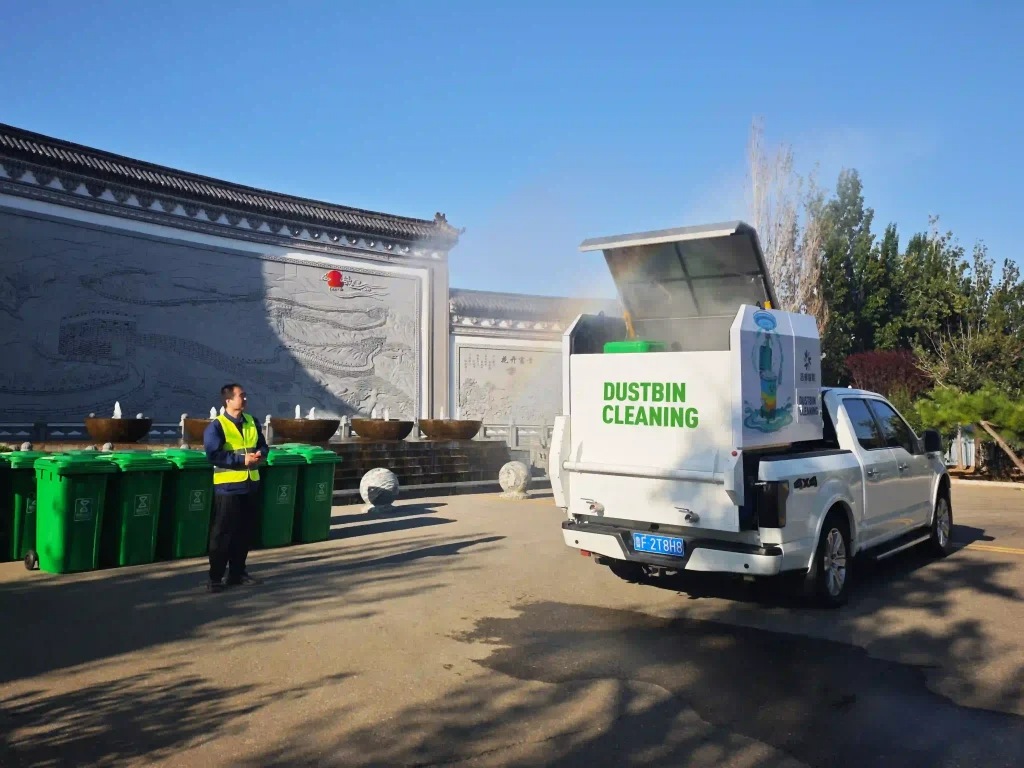
It can clean up to two standard 120L or 240L plastic bins at once. The chamber keeps the spray close to the container, and the internal system reaches surfaces that are easy to miss when a worker washes only the visible outer wall.
For a property service team, market operator, or municipal sanitation crew, this can become the everyday baseline. The sequence is straightforward: load the bin, secure it, wash the inside, rinse the outside, collect the wastewater, and return the container to service.
When Steam Cleaning Becomes More Useful
Steam cleaning is available from 120°C to 150°C. It is not intended to replace the routine wash for every container. Its value is the extra option it gives the operator when residue is sticky, dried, or concentrated around corners and contact points.
A steam cycle may help when a bin has held wet waste for an extended period or when a hot-water pass leaves a visible film. The setting should still follow the bin condition, cleaning frequency, and operating procedure used by the sanitation team.
Both modes use the same enclosed handling arrangement. The bin stays inside while the internal rotating nozzles and external spray rods work around it, so the cleaning method can change without changing the vehicle platform.
How a Bin Cleaning Machine Combines Heat and Pressure
Inside the chamber, two sets of rotating nozzles provide a 360-degree high-pressure rinse. Self-rotating spray rods mounted on the cover wash the lid, walls, edges, and other exposed surfaces. That combination matters because internal residue and exterior handling grime usually arrive together.
A reel-type handheld high-pressure spray gun handles ground stains and areas outside the fixed spray pattern. The operator can finish a stubborn spot without changing the main cycle or turning the job into an open manual wash.
The high-pressure pump is driven by a 12 HP diesel engine. The clean water tank has a capacity of 0.5 m³, while the sewerage tank has a capacity of 0.3 m³, which collects the waste and solid particles. The presence of the two tanks makes it possible to move the cleaning process to the location.
Choosing the Right Cleaning Mode
Match the cycle to the residue
Start with high-temperature water for ordinary residue and scheduled washing. Consider steam when deposits are hard to remove, wet waste has built up repeatedly, or surfaces remain dirty after a normal hot-water cycle.
Keep the container and site in view
Temperature is not the only determining factor. The team has to also take into account other factors including the bin size, washing frequency, work environment, disposal of wastewater, and the use of a handheld spray gun to wash nearby spots.
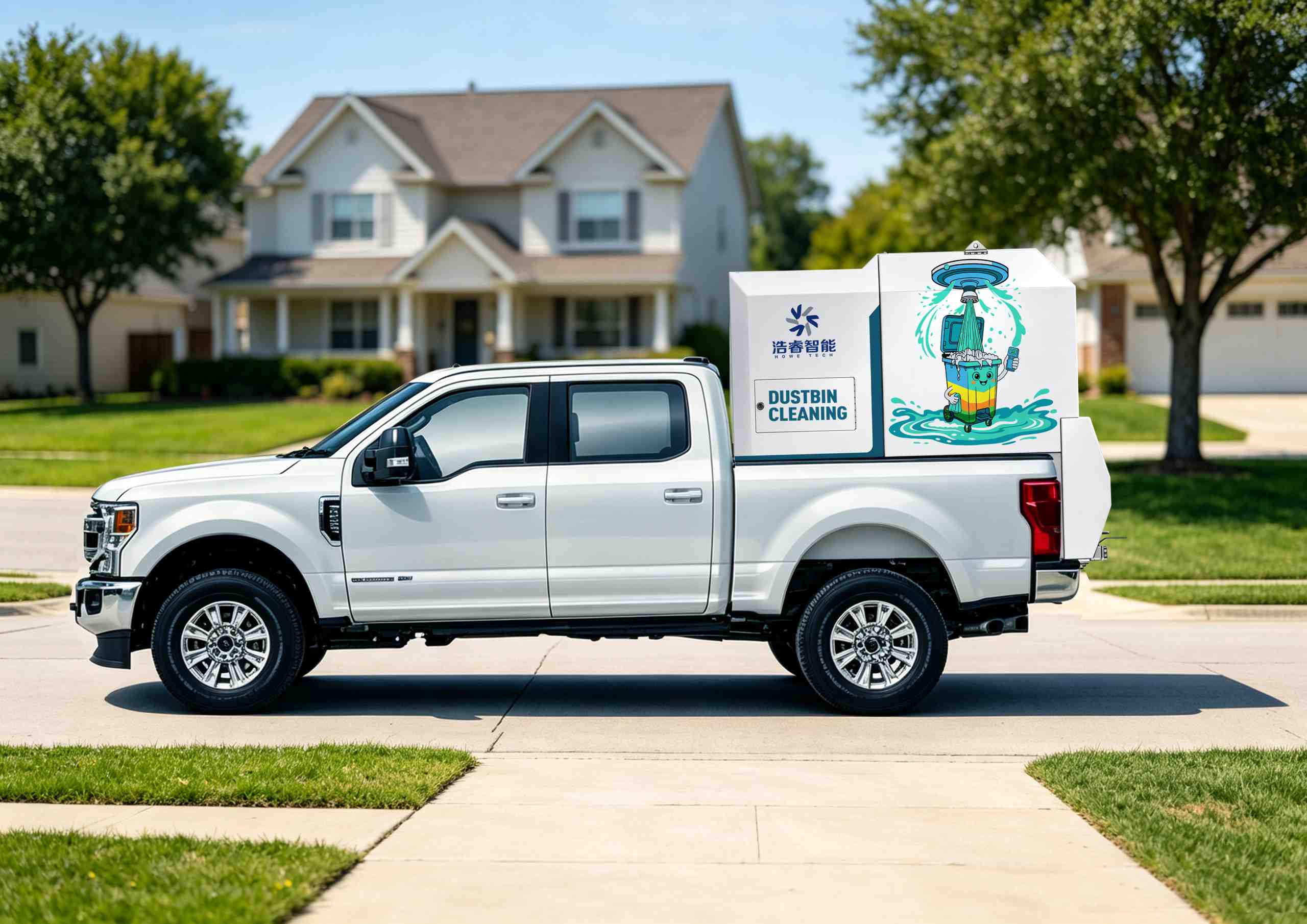
The CHR01QXP is designed for a pickup truck cargo bed with a minimum length and width of 1500 mm and a chassis payload capacity of at least 1000 kg. Those requirements should be checked before installation so the vehicle and upper equipment work as one stable cleaning platform.
Where the System Fits
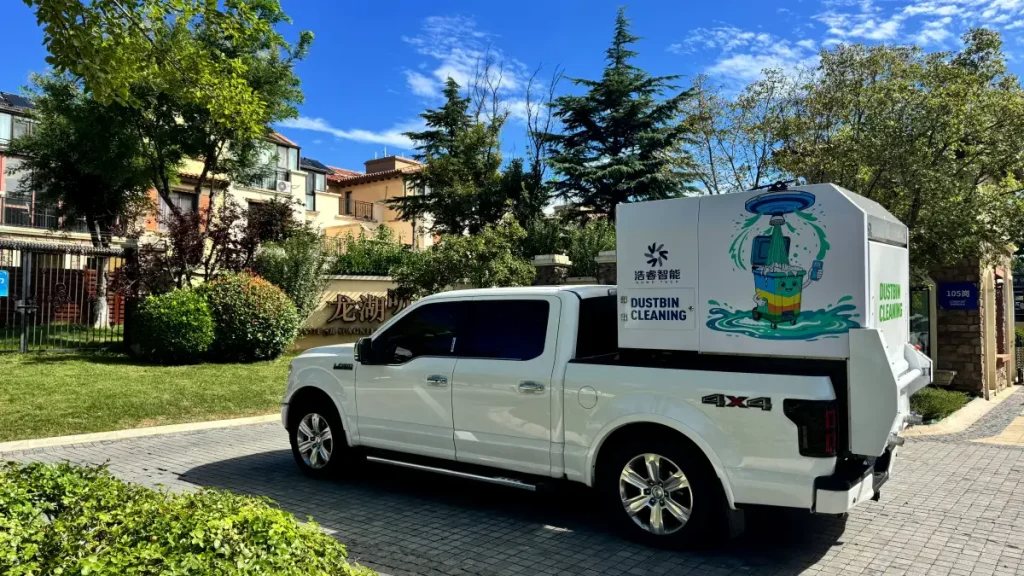
A pickup truck-mounted dustbin cleaner is useful when bins are spread across residential communities, public facilities, parks, markets, or commercial service areas. It can travel with the sanitation team and bring the washing chamber, water, wastewater collection, and auxiliary spray capability to the places where the bins are handled.
For teams reviewing a broader sanitation fleet, the Haide Sweeper sanitation vehicle range provides a starting point for comparing cleaning formats.
Conclusion
A bin cleaning machine is most useful when it can respond to the residue instead of treating every container the same way. Hot water supports regular cleaning, steam adds a stronger option for stubborn deposits, and the enclosed chamber keeps washing and wastewater collection within one controlled process.
For 120L and 240L plastic bins, CHR01QXP brings these functions into a pickup truck-mounted format for public and commercial sanitation work.
Explore the Haide Sweeper dustbin cleaning series to connect the cleaning mode, vehicle platform, and daily hygiene workflow.
FAQ
Q: Is hot water better than steam for every waste bin?
A: No. Hot water is a practical routine choice for ordinary residue and scheduled washing, while steam is more useful when deposits are stubborn or dried. The operator should select the mode according to bin condition, cleaning frequency, and the result required from the service cycle.
Q: What bin sizes can the CHR01QXP clean?
A: The CHR01QXP is designed primarily for standard 120L and 240L plastic waste bins. Its enclosed chamber can clean up to two of these bins at the same time, allowing a sanitation team to handle a small batch without moving the containers to a fixed wash bay.
Q: Does the machine clean the outside of a waste bin?
A: Yes. Two sets of rotating nozzles wash the interior, while self-rotating spray rods mounted around the chamber cover the exterior. A handheld high-pressure spray gun is also available for ground stains and areas that fixed nozzles cannot cover effectively.
Q: Why does enclosed washing matter?
A: Enclosed washing keeps the bin, spray, and wastewater within a defined working area. That helps reduce splashing and overflow around the service point, supports a more orderly cleaning routine, and makes it easier to combine internal washing with external rinsing in public-facing locations.