A bin cleaning system should be selected around the container sizes it must handle. A route built around 120L and 240L wheelie bins does not need the same lifting structure, water capacity, or work cycle as a site that cleans 660L or 1100L containers. Haide Sweeper offers fixed, towed, pickup-mounted, and truck-mounted equipment formats, so the selection process can begin with the real bin mix instead of a generic machine category.
Container capacity affects nearly every practical detail: how the bin is lifted, whether one or two containers can be cleaned at once, how much wastewater is generated, and whether the work is better done on route or at a central washing point. Matching those details early prevents an operation from buying equipment that is powerful but awkward for the daily job.
Why Container Size Drives System Selection
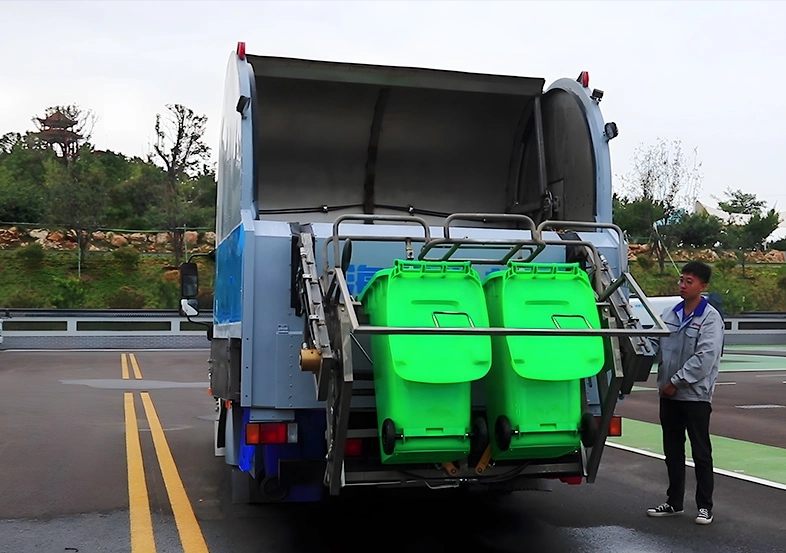
Small wheelie bins are usually handled by one or two workers and appear in dense numbers across residential compounds, schools, small commercial streets, and facility back-of-house areas. Large bins are fewer, heavier, and more likely to sit at transfer points, public waste rooms, markets, or commercial properties.
A bin cleaning system must therefore solve two different problems. It must wash effectively, and it must move the container safely into the cleaning position. The larger the bin, the more important the lifting mechanism, chamber clearance, cleaning cycle stability, and wastewater capacity become.
This is where product range matters. The Haide Sweeper dustbin cleaning series includes fixed stations, trailer-mounted equipment, pickup-mounted units, and dustbin cleaning trucks, giving sanitation teams several ways to match equipment to container size and location.
Equipment Choices for 120L and 240L Bins
Compact Routes Need Fast Handling
The most common service pattern for 120L and 240L bins is high-frequency, multi-point cleaning. These containers are small enough to move around buildings and curbside areas, but they still collect odors, food residue, liquid waste, and grime around lids and wheels.
For these bins, a compact commercial bin cleaner or pickup-mounted unit can be practical because access and transfer flexibility are often more important than the highest water volume. Operators should look for a stable lifting process, high-pressure internal washing, exterior rinsing, and a wastewater collection method that keeps the service area tidy.
Two-Bin Cleaning Improves Route Rhythm
Some systems can clean one or two smaller bins per session, depending on the model and chamber design. This matters because small bins often appear in groups, and cleaning them one at a time can slow down a route if the machine is otherwise capable of higher throughput.
The goal is not only speed. Two-bin handling also helps the team work in a predictable rhythm: load, wash, drain, return, then move to the next cluster. That rhythm supports cleaner work around shared waste rooms and property service yards.
Equipment Choices for 660L Containers
Centralized Washing Becomes More Attractive
A 660L bin is large enough that route access, lifting safety, and cleaning chamber size become serious selection points. These containers are common in communities, public facilities, markets, and commercial waste points where several smaller bins may be replaced by fewer large ones.
For sites where bins are gathered in one place, a fixed bin cleaning station can be efficient. The CHD0101QXZ bin cleaning station is described for 120L, 240L, and 660L containers, with selectable cleaning modes and a fully enclosed high-pressure cleaning system.
Larger Bins Need More Than Water Pressure
Cleaning a 660L bin is not simply a scaled-up version of washing a 120L bin. The interior surface is larger, residue can settle in deeper corners, and the container itself requires a more secure lift and turn movement.
A practical system should combine high-pressure water with stable positioning, internal rotating nozzles, external washing, and enough drainage control to avoid overflow. In a centralized station, operator visibility and emergency controls also become important because the cleaning operation is repeated many times in the same area.
Equipment Choices for 1100L Containers
Full Dustbin Cleaning Trucks Suit Mixed Heavy Routes
An 1100L container changes the selection logic again. These bins are larger, heavier, and more likely to appear in public sanitation networks, waste transfer areas, commercial back lanes, and large residential compounds. A small machine may be convenient, but it may not have the lifting capacity, chamber size, or water storage required for consistent work.
The CHD5073TQXQLE6 dustbin cleaning truck is listed for 120L, 240L, 660L, and 1100L bins. Its stated cleaning arrangement allows one to two 120L or 240L bins per cycle, or one 660L or 1100L bin, making it relevant for routes with mixed container sizes.
Water Capacity and Wastewater Capacity Matter
Large bins create larger water demand and more wastewater. A system that looks adequate for a demonstration may become inefficient if it must stop too often for refilling or discharge during real route work.
In light of this, the assessment of the dustbin cleaning truck should not only consider the functionality of the washing system but that of the whole platform as well. Clean water quantity, sewage tank size, heating, pumping, controls, and discharge planning all contribute to ensuring that the route is completed successfully.
Technical Details That Matter Across Sizes
High-Pressure Rotating Nozzles
Internal cleaning depends on water reaching corners, grooves, and the bottom of the bin. High-pressure rotating nozzles help distribute the spray across the inner surface, reducing missed areas that often remain after manual washing.
Clean Water and Wastewater Separation
Clean water and wastewater separation is essential for professional sanitation work. It prevents dirty runoff from mixing with the washing supply and keeps the cleaning site more controlled, especially when bins are washed near public roads or property service areas.
Adjustable Cleaning Cycles
Different bins need different cleaning intensity. A lightly soiled residential bin may need a short cycle, while a food waste container may require warmer water, a longer wash, or additional spot cleaning. Adjustable cycles help operators respond without overusing water or time.
How Haide Sweeper Supports Different Bin Formats
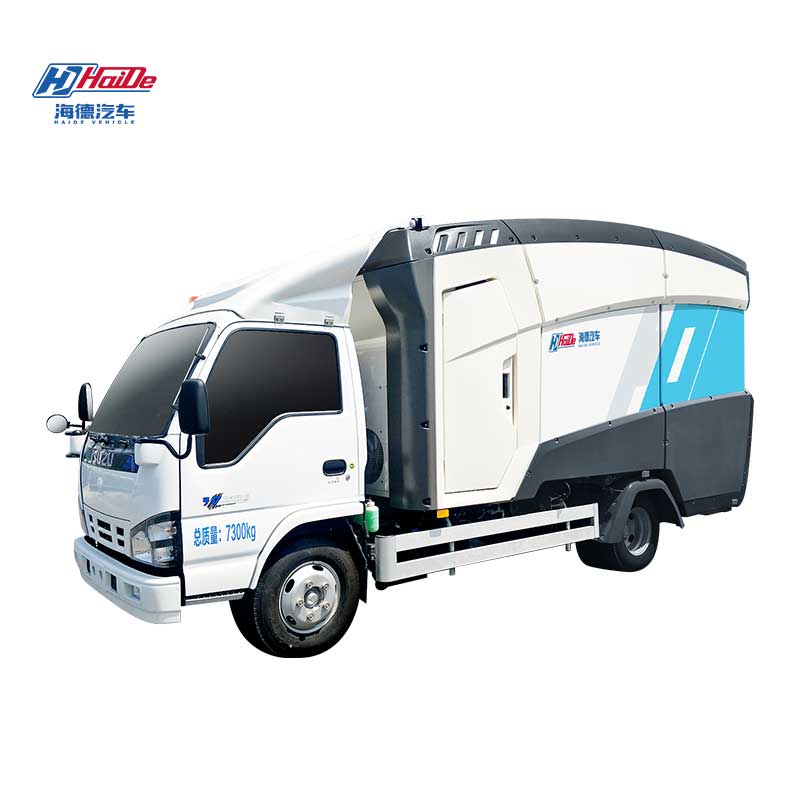
Haide Sweeper is useful for buyers who need more than one equipment pathway. A property team may focus on 120L and 240L bins with flexible mobile cleaning. A sanitation depot may prefer a fixed station for centralized 660L cleaning. A city route may need a dustbin cleaning truck that can handle both small and large containers.
That range is important because waste systems rarely stay uniform. Residential areas expand, commercial zones change, and public sanitation routes often combine small wheelie bins with larger shared containers. Selecting a bin cleaning system that fits the real container mix makes the equipment easier to use and easier to justify over time.
Conclusion
A bin cleaning system works best when it is chosen from the container outward. Start with the sizes that must be cleaned, then evaluate lifting method, chamber design, water and wastewater capacity, cleaning cycle, and the location where washing will happen.
Haide Sweeper provides several equipment formats for 120L, 240L, 660L, and 1100L bin cleaning needs, helping sanitation teams avoid a one-size-fits-all decision.
Compare Haide Sweeper bin cleaning solutions to match equipment format with container size and operating site.
FAQ
Q: What container sizes should a bin cleaning system support?
A: It depends on the collection route. The residential and property routes would concentrate on 120L and 240L bins. The public sanitation and commercial collection could require 660L and 1100L. The equipment should match the largest bin used regularly.
Q: When is a fixed bin cleaning station a good choice?
A: A fixed cleaning station is suitable where bins can be moved to a particular cleaning location like the depot, property service yard, or waste center. It can support repeatable washing without moving a vehicle through every service location.
Q: Can one dustbin cleaning truck handle different bin sizes?
A: Some dustbin cleaning trucks are designed for mixed sizes. The CHD5073TQXQLE6 is listed for 120L, 240L, 660L, and 1100L bins, with different single-cycle configurations depending on the container size. Always confirm the target bin mix before selection.
Q: Why should water tank size be considered before buying equipment?
A: The size of water tanks determines how long the machinery runs without refilling, while the size of sewage tanks determines how frequently the wastewater is emptied. Larger containers and dense routes usually require more onboard capacity or a clear discharge plan.