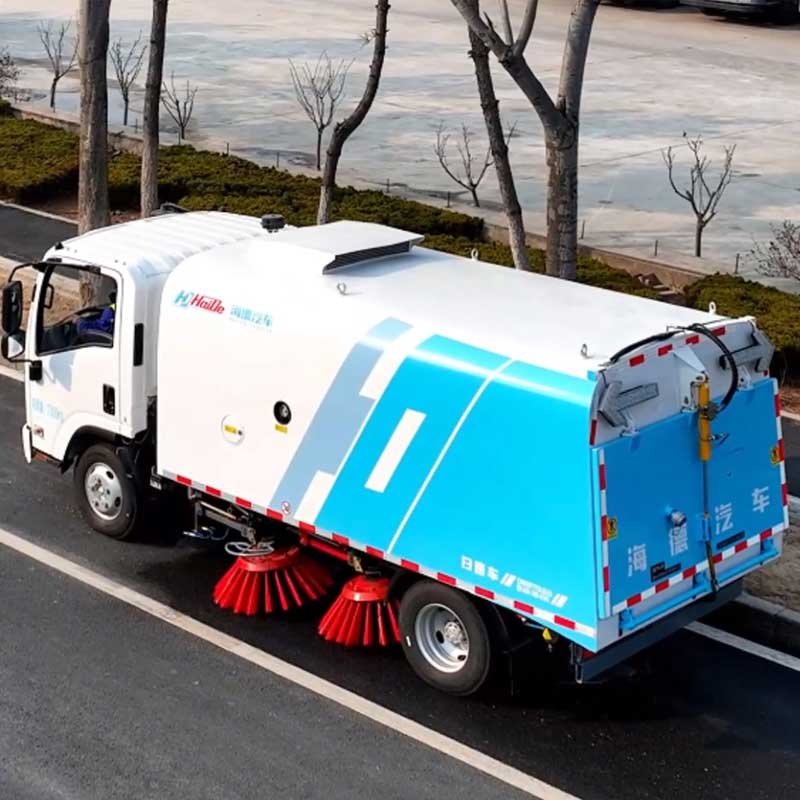
Keeping urban environments clean and free of particulate pollution requires more than just regular deployment of sanitation fleets. The demanding operational conditions of municipal dust, concrete grit, and heavy debris mean that mechanical wear is continuous and aggressive. For fleet managers and municipal contractors, implementing a rigorous, structured preventative maintenance protocol is the most effective way to protect capital investments and ensure uninterrupted service.
Why Preventive Maintenance Critical for Your Road Sweeper Truck
Municipal streets present a highly abrasive environment where fine dust, road salt, gravel, and tire particles act as continuous grinding agents against mechanical components. Without a proactive inspection strategy, these elements quickly compromise critical mechanical assemblies. For any operator running a road sweeper truck, neglecting daily and weekly care leads to a cascade of mechanical failures, beginning with degraded sweep efficiency and ending in expensive hydraulic or engine rebuilds.
What Is the Daily Maintenance Protocol for a Road Sweeper Truck
Walkaround and Safety Inspections
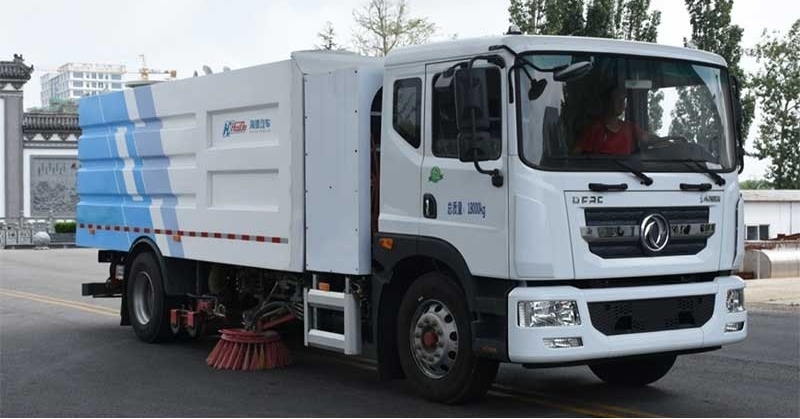
Before any road sweeper truck departs the depot, a systematic walkaround inspection must be conducted to guarantee road safety and mechanical readiness. Operators must visually inspect the under-chassis area for any signs of hydraulic oil, coolant, or fuel leakage. Tires must be checked for correct inflation and physical damage, such as sidewall cuts or embedded debris, which could cause a blowout during operations. The proximity sensors on the safety frame must also be tested to ensure they function properly.
Fluid levels represent another critical checkpoint during the pre-operation phase. The operator must verify oil levels in both the chassis engine and the auxiliary engine, which drives the high-power suction fan. Coolant reservoirs and water tank levels must be fully inspected. In advanced fleets, such as those employing Haide Sweeper machinery, built-in low-water sensor alarms are utilized to automatically cut off the high-pressure water pump when the tank runs low, preventing catastrophic dry-burn damage to the internal pump seals.
Washdown and Hopper Management
At the end of every shift, the stainless steel debris hopper must be thoroughly washed out using high-pressure flushing systems. Allowing damp dirt, leaf litter, and chemical residues to dry inside the hopper accelerates corrosion and leads to material buildup that can unbalance the hopper structure or clog the rear discharge door seals.
Special attention must be paid to the large-area stainless steel suction filter mesh located at the top of the hopper interior. This mesh prevents lightweight debris, such as plastic bags and leaves, from entering the high-speed fan impellers. If left uncleaned, the mesh quickly restricts airflow, dropping suction pressure and forcing the auxiliary engine to work harder, which spikes fuel consumption. Operators must also clear any foreign objects trapped inside the suction nozzle and verify that the fully floating suction cup maintains a uniform, level seal gap relative to the pavement surface.
How to Execute the Weekly and Monthly Road Sweeper Truck Service Checklist
Sweeping Broom Disc and Nozzle Adjustment
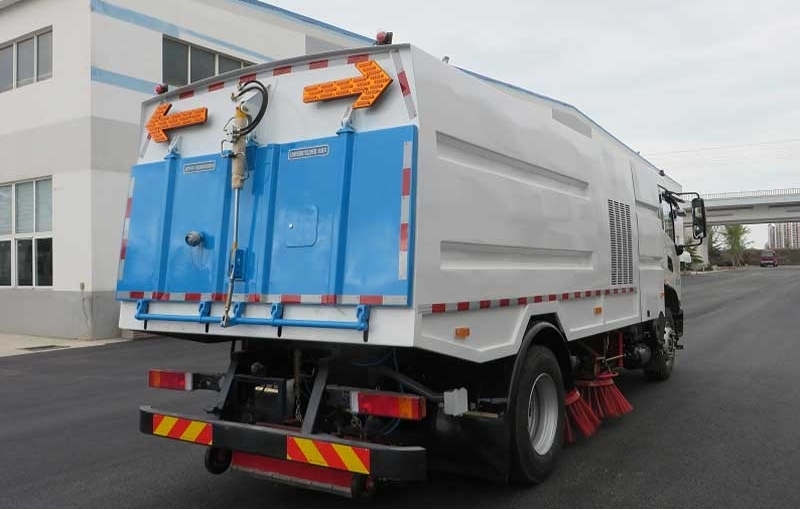
Broom wear patterns must be checked weekly to ensure clean sweeps and minimize consumable replacement costs. Operators should analyze the brush contact area on the pavement to confirm that the sweeping disc is set at the correct angle. Utilizing the stepless brush speed control knobs inside the cabin of a Haide Sweeper vehicle allows for precise adjustments based on current road debris conditions, preventing premature bristle wear from excessive rotational speed.
The weekly service must also verify the functionality of the automated obstacle avoidance system. Side broom assemblies are designed to automatically retract inward when encountering rigid structures like curbstones and then return to their working position. Lubricating the swing arms, pivot points, and inspecting the return springs ensures this mechanism operates smoothly, preventing expensive structural damage to the broom framework during tight street maneuvers.
Hydraulic System Integrity and Oil Viscosity Control
The hydraulic system serves as the muscle of the street sweeping truck, powering the suction fans, broom rotations, and hopper lift cylinders. On a monthly basis, maintenance technicians must inspect the high-precision threaded cartridge hydraulic valve blocks and all rigid pipe sleeve joints for any weeping or micro-leakages. Even minor pressure drops caused by tiny leaks can reduce the efficiency of the sweeping mechanisms and increase fuel consumption.
Maintaining oil viscosity is equally vital, particularly during prolonged summer operations. Technicians must clean and inspect the hydraulic oil cooling fan and radiator fins to ensure unrestricted airflow. If dust and grime block the cooler, hydraulic oil temperatures can quickly exceed optimal operating limits, leading to rapid seal degradation, internal component wear, and sluggish system response.
Engine Intake Dual-Protection Systems
Auxiliary engines operate in extremely dusty, high-particulate microclimates directly behind the sweeping brooms. To prevent airborne dust from entering the combustion chambers, monthly servicing must include a deep cleaning of the multi-stage air intake filtration system. This system typically utilizes a cyclone primary pre-filter, followed by an oil bath filter and a heavy-duty dual-element dry air filter.
During monthly maintenance, the cyclone pre-filter cup must be emptied of accumulated dust, and the oil bath reservoir must be cleaned and refilled with fresh engine oil of the correct viscosity. The dual dry elements must be inspected and replaced according to manufacturer run-time specifications. This robust dual-protection framework ensures clean combustion air, protecting cylinder walls from abrasive wear and preserving engine horsepower.
How Haide Sweeper Lifetime Care Simplifies Your Road Sweeping Truck Operations
The choice of high-grade street sweepers is just one part of having clean streets; having strong and reliable backing from the manufacturer is what makes all the difference. With more than three decades of professional experience in the engineering of environmental vehicles for municipal purposes worldwide, Haide Sweeper produces heavy-duty equipment designed for efficient street sweeping. Such a rich manufacturing background allows Haide Sweeper to produce top-notch vehicles capable of operating in any conditions.
In order to provide minimal fleet down time, Haide Sweeper offers the unique and world-class service of the CTEAS Seven-Star Excellence Certified after-sales service system. Such a service includes round-the-clock technical hot line support, video diagnostics and speedy responses from field service technicians. Moreover, international sales are covered by flexible manufacturing approaches, which include both ODM customization and Knock-Down (KD) assembling at the location of the international partner.
Conclusion
Implementing a systematic daily, weekly, and monthly maintenance checklist is the absolute key to keeping municipal sweepers operating at peak suction performance and efficiency. By proactively managing wear on brooms, hydraulic systems, and engine air intakes, fleet managers can significantly lower overall operating costs and extend vehicle lifespans. Investing in preventative care not only protects high-value assets but also ensures clean, healthy, and pristine urban environments.
To discover how advanced sweeping engineering can optimize your sanitation fleet, please contact us to connect with a specialist.
FAQ
Q: What is the recommended service interval for a road sweeper truck auxiliary engine?
A: The auxiliary engine of a street sweeping truck operates in high-dust environments and requires more frequent air filter and oil changes than standard truck engines. It is highly recommended to perform air intake pre-filter cleaning daily, oil bath inspections weekly, and full oil and filter replacements every 250 operating hours to maintain optimal performance.
Q: How do you adjust the sweeping broom pattern on a Haide road sweeper truck?
A: Adjustment of the broom pattern of the Haide Sweeper model can be done by changing the pressure settings and angles of the disc brushes. Operators can adjust the speed of the brushes through the control panel inside the cabin, and they must achieve an oval-shaped pattern when the brushes are in contact with the pavement surface.
Q: Why does my road sweeper vehicle lose suction power during operation?
A: The main cause of reduction in suction strength in a road sweeper car may be due to the clogging of the stainless steel mesh filter in the debris hopper, blockage in the suction nozzle inlet, and deterioration of the rubber seals in the suction cup. The problem can be solved instantly by cleaning the hopper mesh and maintaining a tight level seal in the suction cup.
Q: How does a low-water sensor protect a road sweeper truck high-pressure water system?
A: Water pumps for pressure need constant water to cool and lubricate the pumps internally. The low water sensor installed in the street sweeping truck keeps track of water level in the clean water tank and cuts off the high-pressure pump circuitry in case water runs out to avoid pump failure due to lack of water.
Q: What is the benefit of the CTEAS Seven-Star Service provided by Haide Sweeper?
A: The CTEAS 7-star service from Haide Sweeper ensures that operators of international fleets get the best technical services, such as 24-hour hotline support, quick parts delivery, video diagnosis, and engineering services at their location. The maintenance plan helps to reduce downtime of vehicles, ensures efficiency of municipal fleets, and safeguarding the entire investment.