Fully enclosed bin cleaning equipment matters because it keeps the container, spray action, and dirty water inside a controlled washing space. For public sanitation work, that means a crew can clean the inside and outside of a 120L or 240L plastic bin without turning the surrounding pavement into an uncontrolled rinse area.
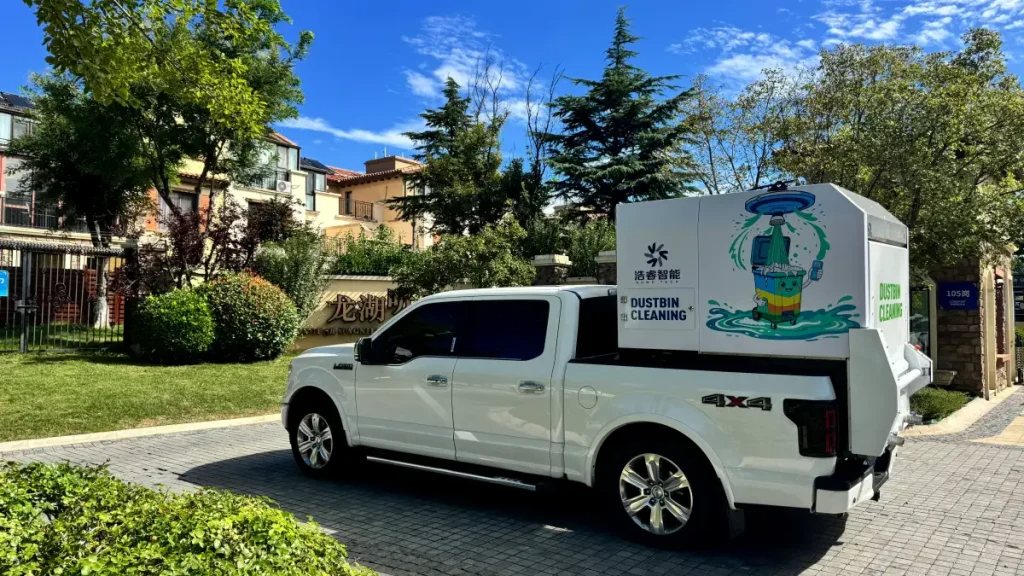
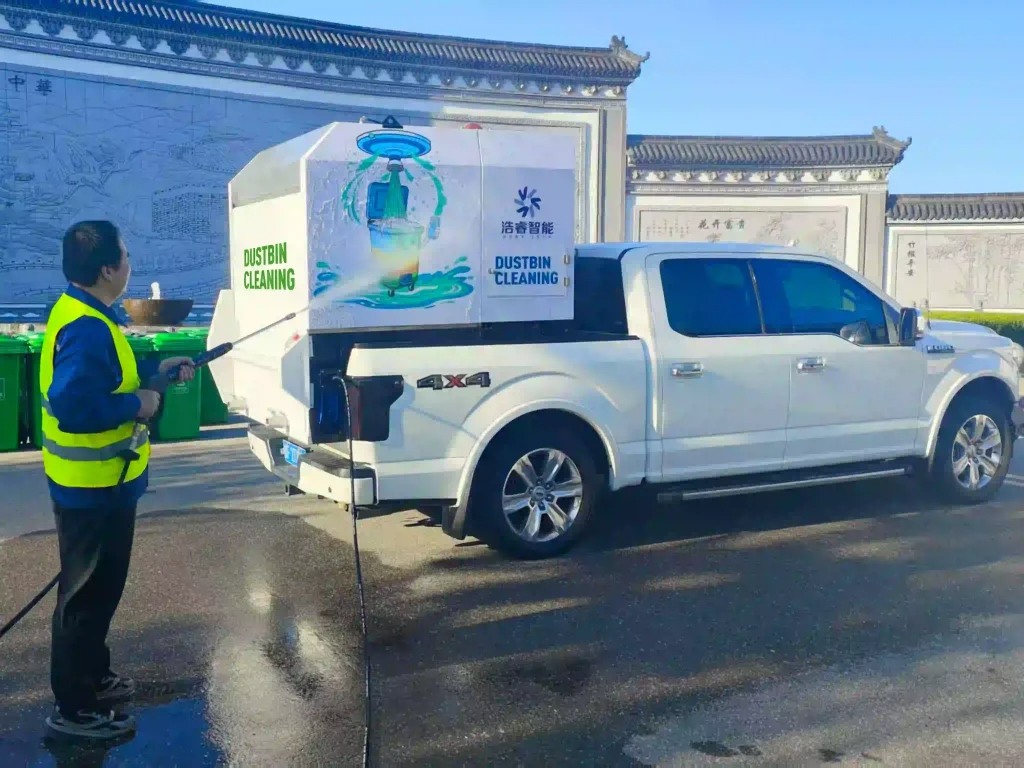
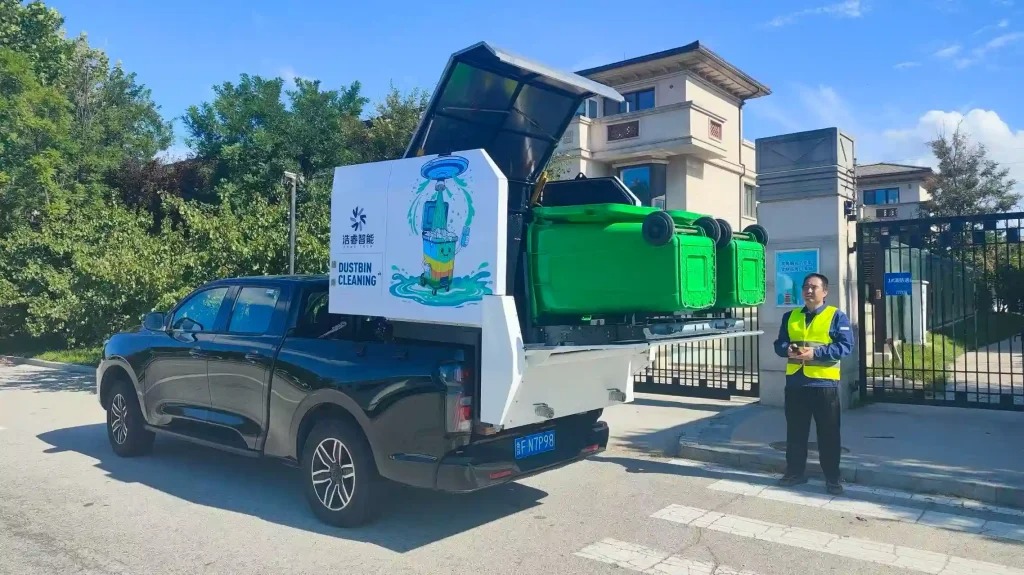
The CHR01QXP Pickup Truck-mounted Dustbin Cleaner uses a lifting and turnover mechanism to move the bin into its chamber. High-pressure rotating nozzles wash the interior, external spray rods cover the outside, and a separate wastewater tank receives the liquid and debris generated during the cycle.
The Problem with Open Bin Washing
A waste bin is not clean simply because its outer panel looks bright. Food residue, liquids, dust, and fine material can remain on the inner floor, side walls, lid edges, and wheel area. An open hose may wet the container, but it often leaves the operator chasing missed surfaces and dirty runoff.
That weakness becomes more visible in public areas. Residential communities, markets, schools, parks, and commercial properties may have limited space for washing, nearby pedestrians, and surfaces that should not receive a stream of dirty water. The equipment layout therefore affects hygiene as much as the water pressure does.
How Enclosed Bin Cleaning Equipment Works
Internal surfaces
The CHR01QXP places the bin inside a fully enclosed chamber and uses two sets of rotating nozzles for a 360-degree high-pressure rinse. The rotation and vertical movement help direct water toward the floor, corners, inner walls, and other areas that are difficult to clean consistently by hand.
This is especially useful for standard 120L and 240L plastic bins, which are common in residential and service environments. Up to two bins can be cleaned at the same time, so the crew can keep the handling process compact while still giving the inside of each container a dedicated wash.
External surfaces
The outside of the bin deserves the same attention. Lids collect splashes, handles are touched during collection, and wheels carry grime from one location to another. Spray rods arranged around the chamber cover the outer surfaces, edges, and crevices while the bin is being cleaned.
A reel-type handheld high-pressure spray gun provides a useful second layer of control. It can wash ground stains and finish a stubborn spot that sits outside the fixed spray pattern, which helps the operator complete the job without opening the chamber to an improvised manual rinse.
Automatic Lifting and Bin Positioning
Handling is part of sanitation equipment design. When an operator has to lift, turn, and hold a wet bin manually, the cleaning cycle becomes slower and less repeatable. The CHR01QXP uses a garbage-bin flipping mechanism to bring the container into the chamber, then holds it in position during washing.
Stable positioning protects the cleaning pattern. The nozzles can work around the bin without the container shifting into a blind spot, and the operator can follow a consistent sequence rather than adjusting the load by hand halfway through the wash.
The equipment includes a hydraulic power unit, a starting battery, and an operation control panel. These are not separate conveniences; they form the handling chain that allows a pickup truck-mounted dustbin cleaner to complete lifting, turnover, washing, and return-to-service work in one location.
Centralized Wastewater Collection
Dirty water is one of the clearest reasons to use an enclosed system. The CHR01QXP has a 0.5 m³ water storage tank for cleaning operations and a separate 0.3 m³ sewage tank for wastewater and debris. Central collection helps prevent the water from spreading across a curb, driveway, or public service area.
The wastewater tank is fitted with two discharge ball valves at the rear. This gives the sanitation team a defined point for later discharge instead of leaving the result of washing wherever the bin happened to stand.
Containment also changes how a crew plans its work. The operator can focus on the cleaning cycle and the next bin, while wastewater handling remains part of the machine rather than an improvised task performed after the area has already become wet.
Pickup Truck-mounted Operation
The pickup truck platform gives the CHR01QXP mobility without requiring a separate fixed wash station at every service point. The upper equipment includes the high-pressure cleaning unit, water and sewage tanks, spray systems, lifting mechanism, hydraulic power unit, fuel tank, battery, and control panel.
Installation still requires a suitable carrier. The pickup truck cargo bed should be at least 1500 mm long and 1500 mm wide, and the chassis payload capacity should be no less than 1000 kg. Checking those dimensions early helps prevent an unstable or poorly matched installation.
The unit has a 12 HP diesel engine, a 15 MPa pump rating, and a maximum flow rate of 15 L/min. Its operating voltage is DC12V with a 120Ah battery. These details matter because the machine is a complete mobile work platform, not simply a pressure washer placed on a vehicle.
Where Enclosed Bin Cleaning Fits
Fully enclosed bin cleaning equipment is a good fit where cleanliness must be visible and controlled. Community waste points, market service lanes, public facilities, commercial properties, and outdoor sanitation routes all benefit when the crew can wash the container without creating a second mess around it.
The CHR01QXP also includes a 10 m water hose connection for auxiliary work. That makes the handheld spray gun useful beyond the bin itself when the team needs to address a nearby ground stain or a surface that fixed chamber nozzles cannot reach.
Teams comparing sanitation options can review the Haide Sweeper sanitation vehicle range and then examine the CHR01QXP Pickup Truck-mounted Dustbin Cleaner when enclosed internal and external washing is the priority.
What to Check Before Selection
Start with container size and handling. A system designed for standard 120L and 240L plastic bins should be matched with the actual containers used by the service area. Next, review the cleaning location, water access, wastewater discharge point, and the amount of manual handling the crew can reasonably manage.
The cleaning mode is another practical question. The CHR01QXP supports high-temperature high-pressure water cleaning at 60°C-90°C and steam cleaning at 120°C-150°C. A team can therefore establish a routine wash setting and keep a stronger option available for difficult residue.
Finally, check the vehicle installation requirements and service workflow together. The Haide Sweeper dustbin cleaning series is most useful when the equipment choice is connected to the site, bin size, water and wastewater plan, and the way operators actually move containers through a shift.
Conclusion
Fully enclosed bin cleaning equipment improves public sanitation by treating washing as a controlled operating process. The chamber contains the spray action, the lifting mechanism stabilizes the bin, rotating nozzles reach the interior, external rods clean the outside, and dedicated tanks keep dirty water within the machine.
For teams working with standard 120L and 240L plastic bins, the CHR01QXP combines those functions with pickup truck mobility and two temperature-based cleaning modes. Haide Sweeper is a practical reference point when a cleaner service point and a more repeatable bin-washing workflow matter.
FAQ
Q: What does fully enclosed bin cleaning equipment do?
A: It places the waste bin inside a controlled washing chamber so internal and external surfaces can be cleaned while spray and wastewater remain concentrated around the equipment. This helps reduce splash, improve repeatability, and keep public service areas more orderly during sanitation work.
Q: Can the CHR01QXP clean two bins at once?
A: Yes. The CHR01QXP is designed primarily for standard 120L and 240L plastic bins and can clean up to two of these bins simultaneously. The actual work cycle still depends on the container condition and the cleaning mode selected by the operator.
Q: How is wastewater collected?
A: The machine uses a dedicated sewage tank with a capacity of 0.3 m³ to receive wastewater and debris from the washing process. The tank has two rear discharge ball valves, giving the crew a defined outlet for later wastewater handling.
Q: What vehicle is needed for installation?
A: The carrier should provide a cargo bed at least 1500 mm long and 1500 mm wide, with a chassis payload capacity of at least 1000 kg. These requirements should be checked against the equipment weight and the carrier configuration before installation and operation.