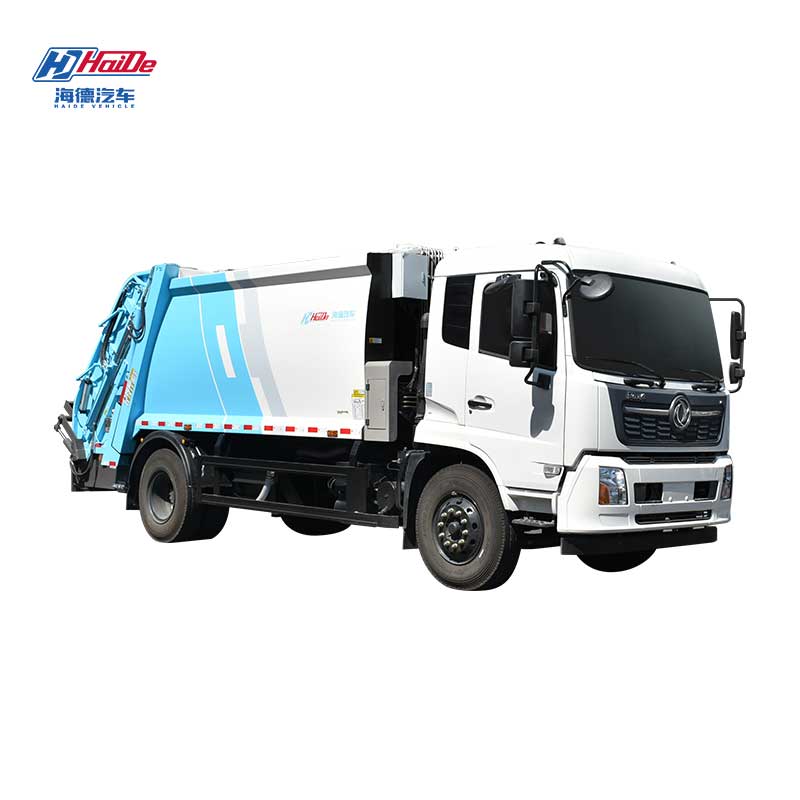
A garbage compactor truck earns its place on a route when loose waste, leakage, and repeated unloading are slowing the collection day. It compresses municipal solid waste, keeps the transfer area sealed, gathers leachate, and makes the loading cycle easier to repeat. For residential streets, markets, campuses, and city sanitation teams, Haide Sweeper focuses on the working details that keep waste moving with less exposure and fewer avoidable interruptions.
Why A Garbage Compactor Truck Changes Waste Collection
Loose waste takes up useful space quickly. Bags, cartons, food waste, and light scattered material can fill a body before the route is finished, sending the truck back to a transfer station or disposal point sooner than planned.
Compaction changes that rhythm. Waste enters a sealed body, is pressed down during collection, and travels with less exposed material around it. Odor and dripping still require attention, but the transfer process is easier to control.
The Haide Sweeper garbage compactor truck is built for collecting, compressing, transferring, and unloading municipal solid waste. It can also handle certain light industrial and agricultural waste streams when their characteristics suit compaction and sealed transport.
Compression Starts With The Loading System
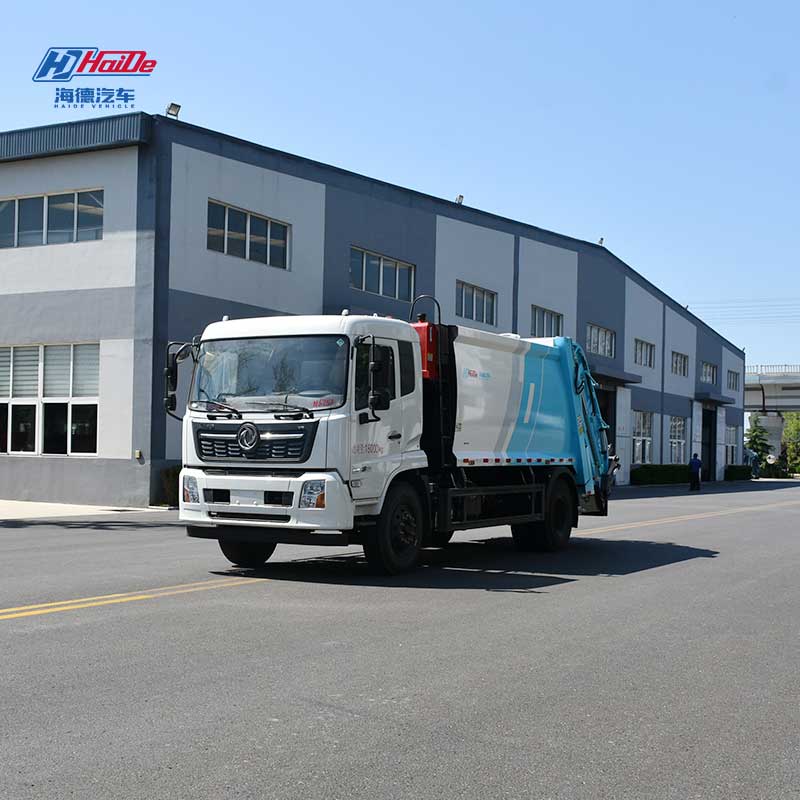
The rear mechanism sets the pace. Filler, hopper, scraper, skateboard, feeding components, and the cover-opening structure all have to move in a sensible sequence. When one part hesitates, the delay appears at every stop that follows.
A reliable rear loading garbage truck should take waste into the body without constant manual correction. That matters on narrow streets and mixed-bin routes, where the crew needs a repeatable motion rather than a loading area that demands attention at every stop.
Filler And Pusher Coordination
The filler receives incoming waste; the pusher plate controls what happens next inside the body. During collection, it gives the material resistance so waste is compacted instead of forming a loose pile near the rear opening.
The pusher also helps discharge the load. Because it works during both collection and unloading, its guide rail and moving interfaces must tolerate repeated compression loads over many cycles.
Cycle Time And Hydraulic Response
Cycle time is one of the clearest ways to judge route rhythm. The CHD5186ZYSDFE6E lists a filling mechanism cycle time of no more than 20 seconds, a discharge cycle time of no more than 50 seconds, and a lifting device working cycle time of no more than 10 seconds.
A few seconds at one stop may seem minor. Across a dense residential district or a commercial collection zone, those seconds become a meaningful part of the working day.
Sealing And Leachate Control Protect The Route
Leachate is the problem people notice first when waste collection goes wrong. Escaping liquid leaves odor, stains, and hygiene concerns along streets and around collection points.
A closed body alone is not enough. The filler-to-box connection needs a dependable seal, leakage needs a defined path, and the structure has to remain tight while the rear mechanism moves under hydraulic pressure.
Double Sewage Tank And Diversion Design
Haide Sweeper uses a double sewage tank design, drainage piping, and a diversion-style sewage collection approach to guide liquid into a dedicated collection area. That arrangement helps reduce secondary pollution while waste is compressed and transported.
The difference is especially practical on food-waste-heavy routes, during rainy seasons, and wherever mixed domestic waste produces more liquid. Leachate control affects road cleanliness directly, not just the appearance of the truck.
Hydraulic Locking And Silicone Seals
The joint between the filler and the body deserves close attention. Hydraulic locking and high-performance silicone sealing strips help keep that connection tight during loading and transfer, even as the rear mechanism repeats the same movement throughout the day.
Together with a full-sealing lock structure, the silicone strips help keep waste and liquid inside the system. That is a small design detail with a very visible effect on the route.
Control Modes Make The Truck Easier To Operate
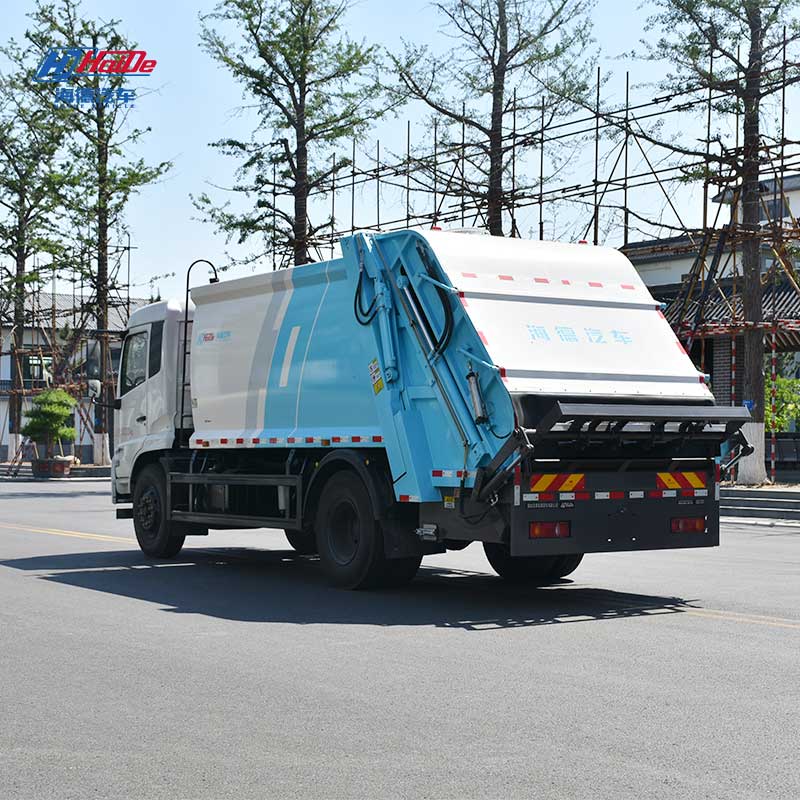
A refuse compactor truck often works close to pedestrians, parked vehicles, curbs, and collection crews. Controls therefore need to be easy to understand when the same actions are repeated dozens of times.
The Haide Sweeper design uses an intelligent control approach with CAN bus architecture and modular structure. Manual, automatic, and semi-automatic modes cover different working conditions, while remote control gives operators more flexibility at the rear of the vehicle.
Automatic operation may suit ordinary household stops. Manual or semi-automatic control can be more useful when waste is irregular or the truck is working in a tight space.
Body Strength And Maintenance Access Matter
Every compression cycle adds stress to the body, pusher track, filler frame, hydraulic cylinders, and moving interfaces. Strength matters, but so does wear resistance, because route equipment has to repeat the same work for long periods.
The garbage tank on the CHD5186ZYSDFE6E uses a curved body concept and high-strength material for deformation resistance and durability. Wear-resistant sliding materials help limit friction, movement noise, and wear during repeated pusher operation.
Maintenance access belongs in the same conversation. Operation and maintenance materials, clear control locations, lighting for night work, and serviceable hydraulic components all make it easier for a team to keep the truck available on demanding routes.
Where Haide Sweeper Fits Urban Waste Routes
Haide Sweeper is a good match for waste collection routes where cleanliness, sealed transfer, and efficient compaction matter as much as capacity. The waste collection and transport lineup includes vehicles for different waste-handling roles, so fleet planners can compare compactor trucks with hook lift, self-loading, and kitchen waste options.
For a garbage compactor truck, the useful questions are direct. Does it load cleanly? Does it stay sealed? Where does the leachate go? Can operators repeat the cycle safely through a full shift?
Those questions make Haide Sweeper relevant for municipalities, contractors, campus sanitation teams, and service operators that want cleaner waste transfer without relying only on manual handling or open transport.
Conclusion
A garbage compactor truck is most valuable when compression, sealing, leachate control, and operator workflow support one another. The result is less exposed waste, a steadier route, better protection for public streets, and a more controlled way to handle daily collection pressure.
Haide Sweeper brings those priorities into practical waste collection equipment, with attention to sealed transfer, hydraulic control, rear loading workflow, and serviceable structure. Review Haide Sweeper service support to match a garbage compactor truck setup with the way your collection routes actually operate.
FAQ
Q: What does a garbage compactor truck do?
A: A garbage compactor truck collects loose waste, compresses it inside a sealed body, carries it to a transfer or disposal point, and unloads it through a controlled discharge process. Compression makes better use of the body, while sealing and leachate collection help keep the route cleaner.
Q: Why is leachate control important in waste collection?
A: Leachate can create odor, stains, slippery surfaces, and hygiene problems when it escapes during collection or transfer. Dedicated sewage tanks, drainage paths, hydraulic locking, and durable seals help keep liquid inside the system and reduce secondary pollution on public roads.
Q: Which specifications should buyers compare first?
A: Useful specifications include gross vehicle weight, rated loading mass, cycle time, hydraulic pressure, body structure, sealing design, control modes, and leachate collection features. Route conditions also matter, especially stop density, waste moisture, unloading frequency, and operator access around the rear loading area.
Q: Is a garbage compactor truck suitable for all waste types?
A: No. It is best suited to municipal solid waste and compatible light waste streams that can be safely compressed. Wet, corrosive, oversized, hazardous, or unusually dense materials may require a different vehicle or handling method, so route waste composition should be reviewed before selection.